Why more Croatians are choosing to come home
- by croatiaweek
- in News
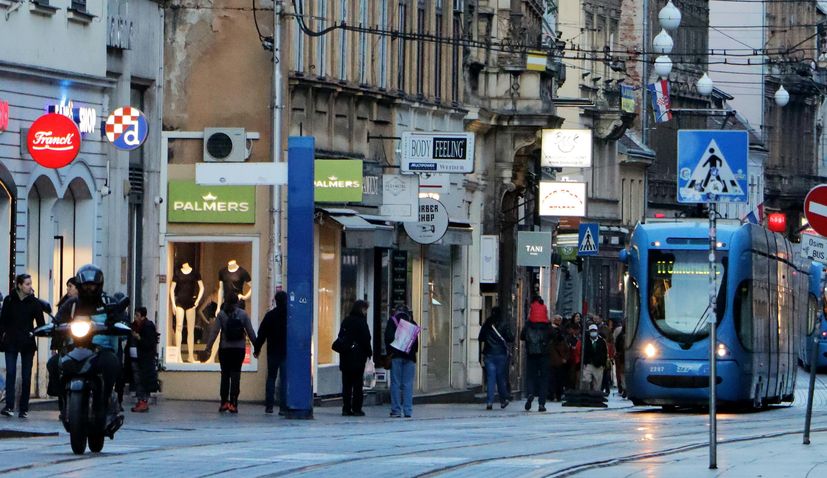
Zagreb
Demographic renewal in Croatia is no longer a matter of choice, but of necessity.
Alongside measures aimed at encouraging higher birth rates, the Croatian government is placing strong emphasis on the return of Croatians who have emigrated, offering financial incentives and comprehensive support to help them settle back home.
The issue was discussed in detail during HRT’s main evening news, where Ivan Vidiš, State Secretary at the Ministry of Labour, Pension System, Family and Social Policy, highlighted the growing success of the “Biram Hrvatsku” (I Choose Croatia) programme.
“Initially, the numbers were slightly lower, but today more than 1,360 people have returned to Croatia through this measure,” Vidiš said. “They have started their own businesses and are employing new workers.”
When it comes to business activity, construction remains the most popular sector among returnees.
However, Vidiš stressed that this is far from the only field attracting returning Croatians.
“Construction dominates, but there is a wide range of other industries. What is particularly encouraging is that many returnees possess highly sophisticated knowledge and advanced skills,” he noted.
The trend of return migration is visible across the entire country, with Zagreb and Slavonia standing out.
“Returnees are coming back to all parts of Croatia, but Zagreb and Slavonia are leading the way. The City of Zagreb and Osijek have recorded the highest number of programme users,” Vidiš said.
The Ministry has also placed strong focus on helping returnees adapt to life in Croatia. Over time, institutions have learned more about the needs of citizens returning from abroad.
“This includes access to childcare, schools, and Croatian language learning. Together with our partners, we have worked extensively on language education, and returnees can now learn Croatian free of charge up to C1 level,” Vidiš explained. Assistance is also provided with residence status and citizenship regulation.
Positive economic developments are playing a crucial role in slowing and reversing negative demographic trends. According to Vidiš, rising wages, strong economic growth and job creation are making Croatia a far more attractive place to live and work.
“There are very few countries that offer up to €20,000 in non-refundable funding to start a business,” he said. “Most people left Croatia before 2017, when the average salary was around €700 in today’s terms and the minimum wage was below 3,000 kuna. Things have changed significantly.”
Croatia now records historically low unemployment, record employment levels and wages that are far more competitive than in previous years.
“These changes clearly show a reversal of trends,” Vidiš added.
For several consecutive years, Croatia has also recorded a positive migration balance.
“We have had a positive migration saldo for a number of years now. This is not only due to Croatian citizens, but we are definitely seeing a strong return. For the first time a few years ago, more than 10,000 of our citizens returned annually,” he concluded.