Why are Croatian trains so slow?
- by croatiaweek
- in News
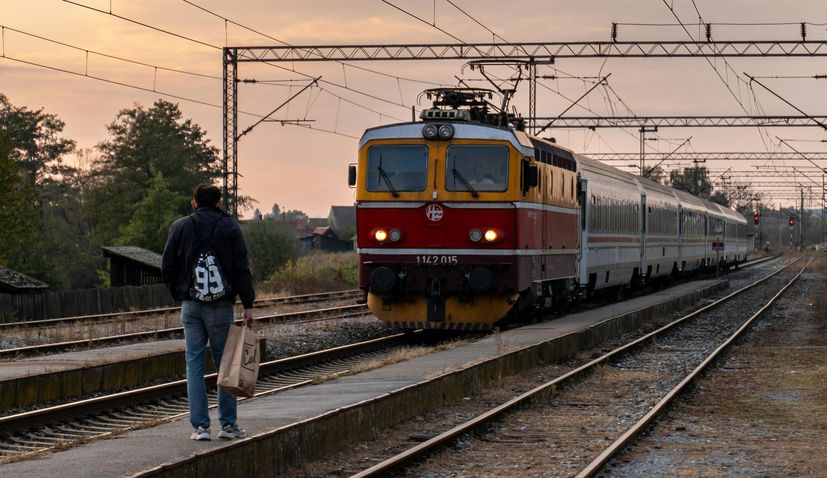
Inside Croatia’s struggle with slow rail travel
One of the most frequent complaints about Croatia’s railways is simple: they are slow.
While trains in Slavonia, in the eastern part of Croatia, once travelled at impressive speeds, decades of ageing infrastructure have taken their toll, leaving passengers wondering why journeys take so long.
The new HRT documentary series Brže ne može (“It Can’t Go Faster”) delves into this very question.
Among those offering first-hand insight is locomotive driver Darko Kurdija, who highlights one of the fundamental issues, single-track lines.
“When there’s only one track, two trains simply can’t pass each other,” Kurdija explains from the driver’s cab as his train rolls along at a modest 50 km/h.
“One of us has to wait at a station before the other can continue.”
Despite today’s low speeds, Kurdija remembers a very different era.
His early years on the job in the 1990s were, as he puts it, “adrenaline-filled”, with trains reaching 130 km/h on certain sections and up to 160 km/h elsewhere.
But by the early 2000s, the decline in speed had already begun.
The contrast with countries boasting advanced high-speed networks, such as Japan, is stark.
Kurdija says he would gladly drive at those speeds if Croatian tracks allowed it.
“We drive exactly as fast as the rules say,” he notes. “If the limit were 260, the speedometer would show 260 right now.”
As Brže ne može shows, the problem is not the trains or the drivers, but the infrastructure beneath them.
The series invites viewers to consider what it would take for Croatian railways to reclaim the speeds they once enjoyed, and perhaps move a step closer to those seen in modern high-speed systems around the world.
Brže ne može, hosted by Andrea Buča, is on Tuesdays on HRT 1 at 8:15 PM.