Croatian and Slovak presidents meet: “Europe is at a critical moment”
- by croatiaweek
- in News
(Photo: Office of the President/Dario Andrišek)
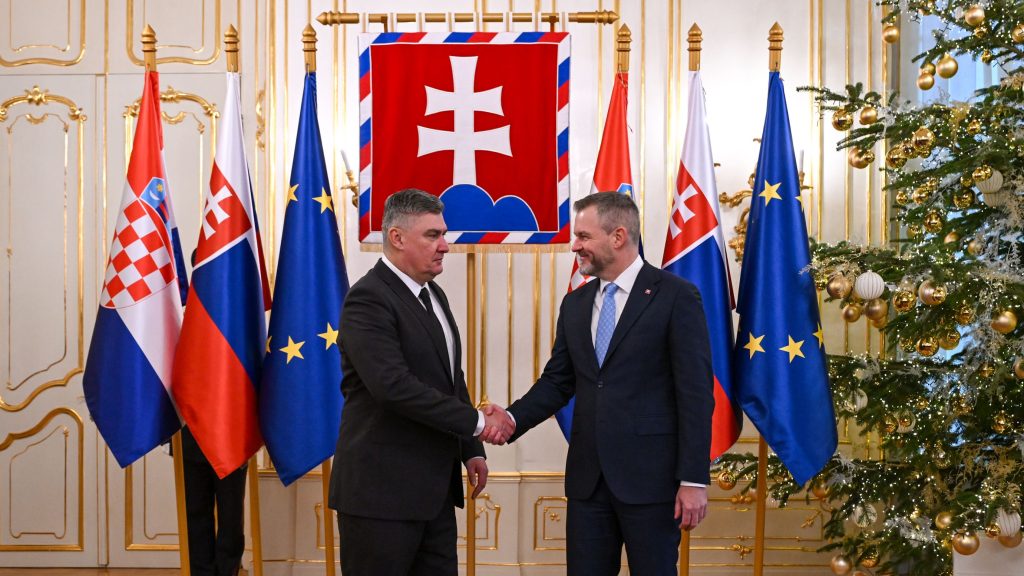
Bratislava, 16 December 2025 – Croatian President Zoran Milanović has warned that Europe is facing a critical political moment, urging greater responsibility and realism in decisions surrounding the war in Ukraine and the future direction of the European Union.
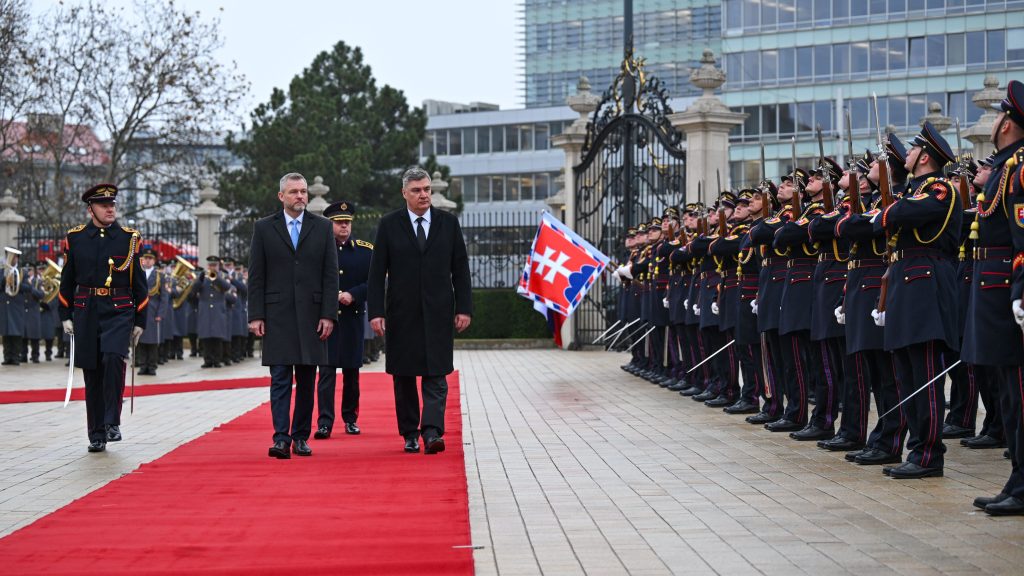
Speaking in Bratislava during an official visit to Slovakia, where he met Slovak President Peter Pellegrini, Prime Minister Robert Fico and National Council President Richard Raši, Milanović addressed proposals suggesting Ukraine might consider territorial concessions in order to end the war.
“I do not have the courage to advise any nation what it should do in moments like these,” Milanović said. “What I do know is that the price of such thinking will be paid in the heads and lives of Ukrainians and Russians, not Germans or French.”
He stressed that any territorial concessions are Ukraine’s decision alone, cautioning that advice coming from afar often carries a “diabolical” element.
According to Milanović, calls urging Ukraine not to compromise ignore the human cost and inevitably result in more deaths.
“It is easy to wave a sword or throw a spear when it does not fall on your own house or garden,” he added.
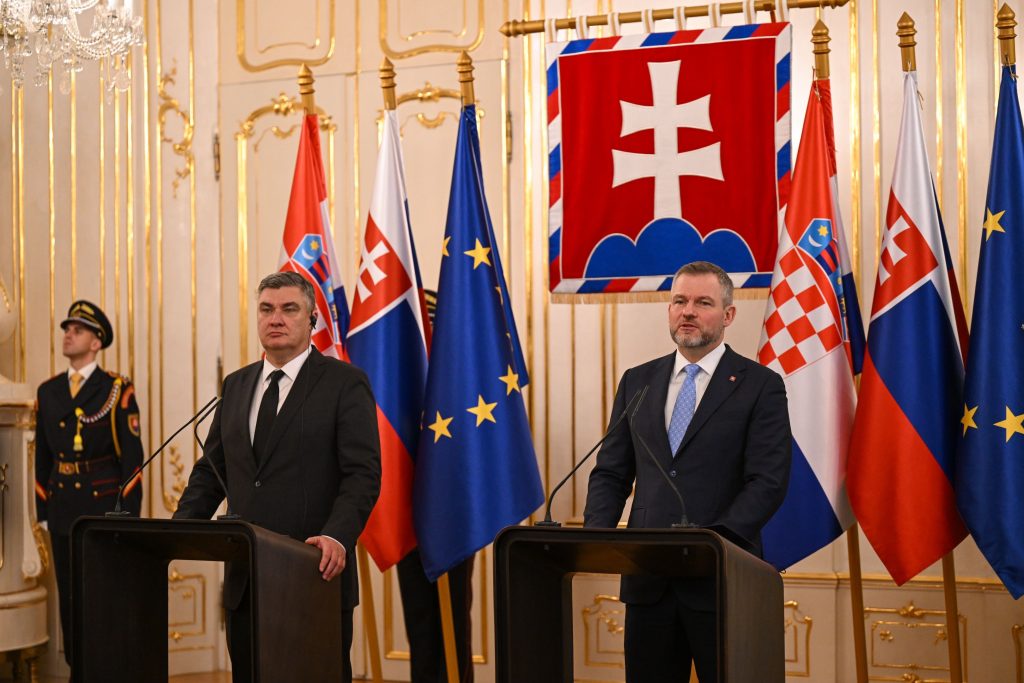
Milanović described the current political climate in Europe as deeply troubling, arguing that certain forces are pushing decisions that are both harmful and dangerous for European states.
(Photo: Office of the President/Dario Andrišek)
He reiterated his long-held view that EU institutions should be approached with what he called “creative scepticism”, particularly as many key decisions are made by officials who are not democratically elected.
“The European Union is not a state, and it should never become one,” Milanović said, warning that further centralisation would lead Europe down “a path to ruin”. Instead, he said the EU should remain a union of free and sovereign national states, defined by tolerance, freedom of movement and cooperation, not by a vertical power structure dominated by a few.
Praise for Slovakia’s Leadership
The Croatian President praised Slovakia’s current political leadership for its independence and willingness to think critically.
“Slovakia is one of the countries whose leaders think with their own heads and hold firm positions on important issues,” Milanović said.
He noted that he held direct discussions with Prime Minister Fico ahead of key decisions at the European Council, and continued those talks with President Pellegrini. These discussions formed the core of his visit, alongside talks on economic cooperation, trade, tourism and industry.
Asked about the possible use of frozen Russian assets to finance reparations or loans for Ukraine, Milanović was sceptical.
“Russian assets are sovereign property,” he said. “If this was to be done, it should have happened in the first year of the war. The fact that it is being discussed at the end of the fourth year shows how weak the legal and logical arguments are.”
(Photo: Office of the President/Dario Andrišek)
While not explicitly opposing the idea, Milanović noted that key institutions, including the European Central Bank, have serious reservations due to the long-term consequences.
He concluded with a broader warning about democratic accountability, criticising decision-makers who act without bearing responsibility for the aftermath.
“This is both the beauty and the curse of liberal democracy,” Milanović said. “After me, the flood. Who will repay hundreds of billions of euros? How will this war truly end? These questions are ignored.”
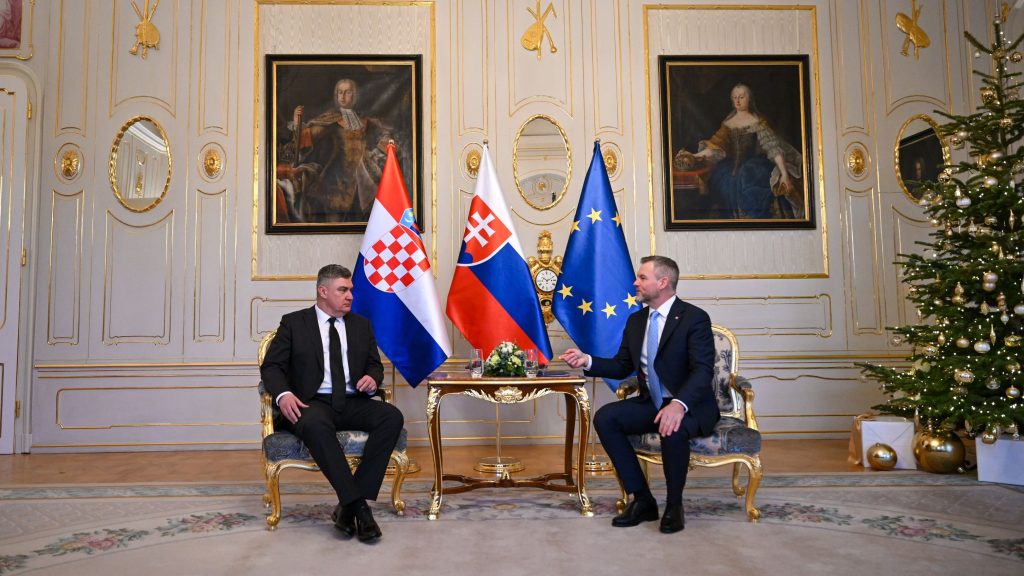
(Photo: Office of the President/Dario Andrišek)
He added that Croatia, Slovakia and many other states are not part of the decision-making chain driving these policies. “I do not want to participate in that,” he said.