Croatia without international newspapers for first time in 50 years
- by croatiaweek
- in News
By Kristina Gaćarić
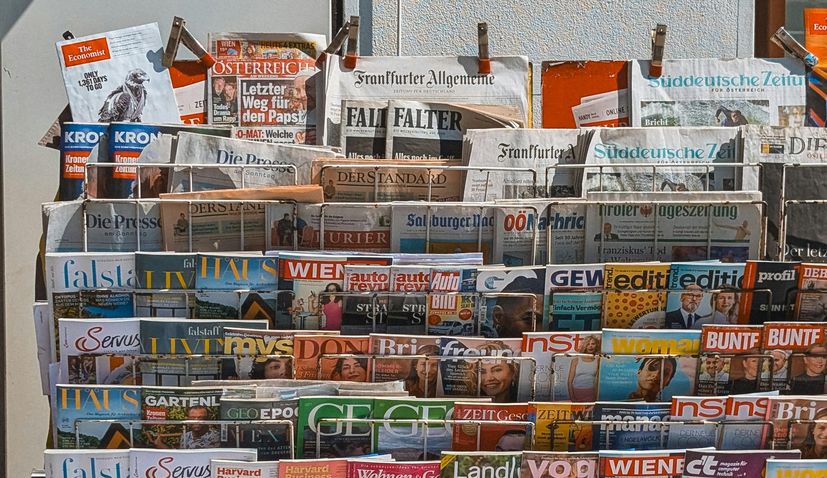
ZAGREB, 10 November 2025 (Hina) – For the first time in half a century, foreign newspapers and magazines are no longer available for purchase in Croatia.
Since 1 October, foreign publishers have withdrawn from the market after new distribution rules made operations financially unviable.
The withdrawal leaves domestic readers, tourists, minority communities, diplomats, and libraries without access to international press, an unprecedented situation for an EU member state and a major tourist destination.
The problem began when Tisak, Croatia’s main distributor, cancelled newspaper distribution earlier this year due to heavy losses. To maintain circulation, the government classified press distribution as a service of general economic interest, agreeing to co-fund it.
Following a public tender, Hrvatska pošta (Croatian Post) was chosen to handle distribution for the next five years. However, under Croatia’s Media Act, only publishers registered in the national Register of Publishers can participate in the subsidised model.
Foreign publishers without a registered company in Croatia cannot join the register — effectively excluding them from the subsidised rates.
For local publishers, distribution costs are fixed at €0.15 per daily issue and €0.25 for periodicals. For foreign publishers, however, Croatian Post estimates the commercial rate to be around four times higher.
Maja Curić, director of DistriEst, the Slovenia-based authorised distributor for over 200 international publishers, said that after months of negotiations, foreign publishers jointly decided to suspend deliveries to Croatia.
“The distribution terms offered by Croatian Post are financially unsustainable and unlike any other EU market,” Curić told Hina. “Charging transport per copy distributed is not common practice anywhere else in Europe.”
According to her, foreign publishers, including Financial Times and Bild Zeitung, would have to set up local companies to meet Croatia’s registration requirements.
Curić said repeated attempts to reach the Ministry of Culture and Media since August had gone mostly unanswered. “The Ministry advised us to negotiate with Croatian Post, while the Post said their hands are tied by regulation,” she explained.
Despite a meeting held in October, no follow-up communication has been received. “Even major publishers and embassies have contacted the Ministry directly, but there has been no response,” Curić added.
Croatia – The Only EU Destination Without Foreign Press
Croatia is now the only European tourist destination without foreign newspapers on sale, while neighbouring countries continue regular distribution.
International media organisations, including the World Association of News Publishers (WAN-IFRA) and DistriPress, have expressed concern and urged the government to intervene in line with EU law and international agreements.
Luciano Stulin, chair of DistriPress at WAN-IFRA, said the subsidy model effectively discriminates against foreign publications.
“By limiting subsidies to publishers registered in Croatia, the government has created a de facto barrier to entry and undermined media freedom,” Stulin warned.
He added that such restrictions are contrary to the principles of European integration and cultural exchange. DistriPress is considering formally alerting the European Commission and the European Parliament’s Committee on Culture and Education if the issue remains unresolved.
The Ministry of Culture and Media said it is “working on a solution” and gathering relevant data. It stated that only domestic publishers had participated in the original tender process and that the foreign sector had not made formal contact until August 2025.

The Ministry stressed that government intervention had already saved the domestic print distribution network from collapse, but also warned that the overall print media industry faces “a very uncertain future” due to falling sales and rising costs.