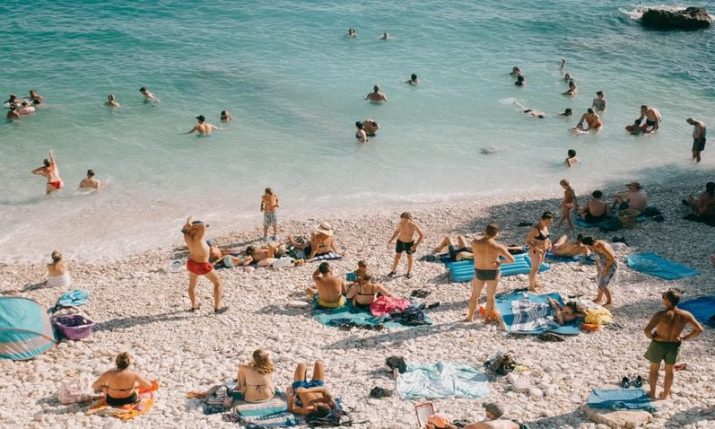
Can beaches be private in Croatia? What the law really says
- by croatiaweek
- in News
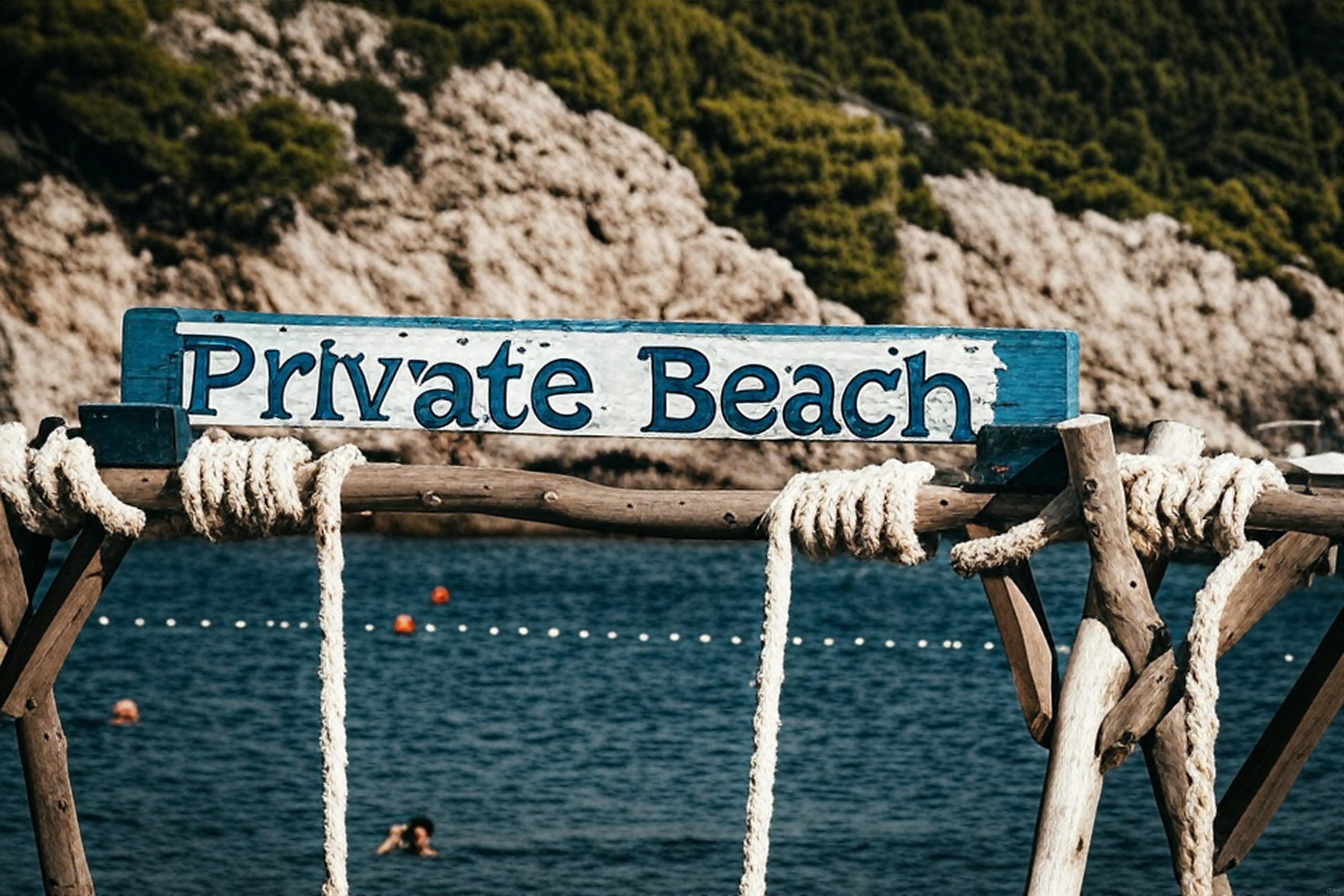
You may have come across signs saying “Private Beach” while walking along the Croatian coast. Perhaps you found a locked gate, a fence, or even a security guard stopping you.
Maybe you yourself have a house by the sea and assumed the beach in front is yours. But is that really legal?
As Zgradonacelnik reports, the new Law on Maritime Domain and Seaports, in force since 29 July 2023, brings clarity to long-standing confusion.
It outlines how the coastline can be used, whether access to beaches can be restricted, and under what conditions, if any, someone can claim a beach as “private”.
What Is Maritime Domain?
In Croatia, maritime domain includes the sea, coastline, and any land or structure legally designated for public use. This means beaches, rocks, walkways, and even natural land strips up to six metres from the high water line. Maritime domain is state-owned and cannot be privately owned, sold, or fenced off without legal permission.
Private Beaches Do Not Legally Exist
The term “private beach” might sound attractive, especially in tourism marketing, but Croatian law does not recognise such a concept.
No person or business can legally claim exclusive use of a part of the coast unless they have a valid concession or permit.
When Can Access Be Limited?
There are only four legal ways someone can use maritime domain for private or restricted purposes:
1. Special Use Permit
Granted for non-commercial purposes, such as building a jetty for local use, or installing disabled access. This permit cannot fully restrict public use, only limit it in specific ways or times. Valid for up to five years.
2. Concession for Commercial Use
This is the only legal mechanism for temporarily restricting access to part of the coast. It must be granted through a public tender and defined by spatial plans.
The concessionaire may charge for services like sunbeds or put up security, but only if these rights are outlined in the contract. Even then, a portion of the beach must remain accessible to the public, and a walkway along the shore must always be available. Full exclusivity is never permitted. Concessions can last from 5 to 50 years, and all details must be publicly available through the Concessions Register.
3. Usage Permit
This simpler permit allows temporary activities such as placing sunbeds, stalls, or small pontoons. It does not give the right to block access or claim exclusivity. Valid for up to five years.
4. Temporary Commercial Use
Used when a spatial plan has not yet been adopted, but there is a seasonal or short-term commercial interest. Valid for up to three years, it also does not exclude public use.
Local authorities and citizens have already pushed back against attempts to block beach access:
Vodnjan: Residents reported “Private Beach – No Access” signs. Local officials acted swiftly, removing them and informing state prosecutors.
Drvenik Veli: A villa owner was charging tourists to access the beach in front of the property. The police intervened.
Vruja: A long-standing case of illegal construction and fencing along the coast. Citizens organised protests under the slogan “Festival of Illegal Construction and Nature Devastation”.
Dubrovnik: Over-commercialisation of beaches sparked the creation of a Facebook group “Live from Dubrovnik’s Beaches”, now with more than 2,200 members.
Common Myths and Misunderstandings
“I own a house by the sea, so the beach is mine.” – False. Even six metres from the waterline is public.
“I put out sunbeds, so I can tell people to leave.” – Not unless you have a concession that specifically allows exclusion.
“It’s a hotel’s private beach.” – Only if backed by a legal concession. Otherwise, it remains public.
“The ad says ‘private beach’.” – Marketing spin, not legal fact.
What to Do If You’re Denied Access
If someone blocks access to the coast without legal authority, this is considered illegal use of public property. You can report it to:
Local municipal officers
The Harbour Master’s Office
The Ministry of the Sea, Transport and Infrastructure
The State Inspectorate
The Police (especially if threats or violence occur)
Illegal Construction and Coastal Damage
Any alteration to maritime domain – such as paving, stairs, pathways, or lighting – requires proper authorisation. Without it, such works are illegal. Suspected violations should be reported to the relevant inspection office or local government.
Croatia’s Beaches Are for Everyone
Whether in front of a luxury villa, resort, hotel, or private home, beaches and the sea are, in principle, open to all. The idea of a fully “private beach” does not exist under Croatian law. Even when a concession allows restricted use, a portion must remain accessible.
The coastline is not a luxury for the few, but a right for all. The updated law reinforces public access and increases transparency.
So next time you see a “Private Beach – No Entry” sign, ask yourself if it is legal. If you are unsure, check or report it.
Because your right to the sea and beach is not a privilege – it is protected by law.
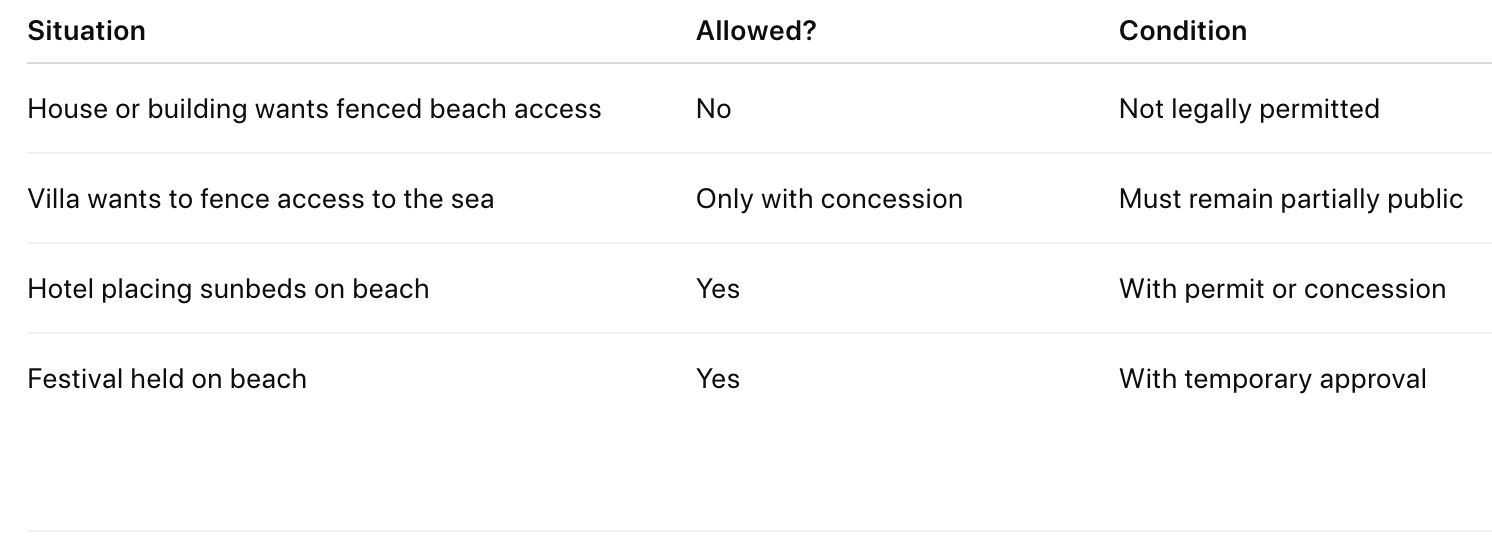
Quick Reference Table: What Is and Isn’t Allowed