Croatian passport seventh strongest in the world
- by croatiaweek
- in News
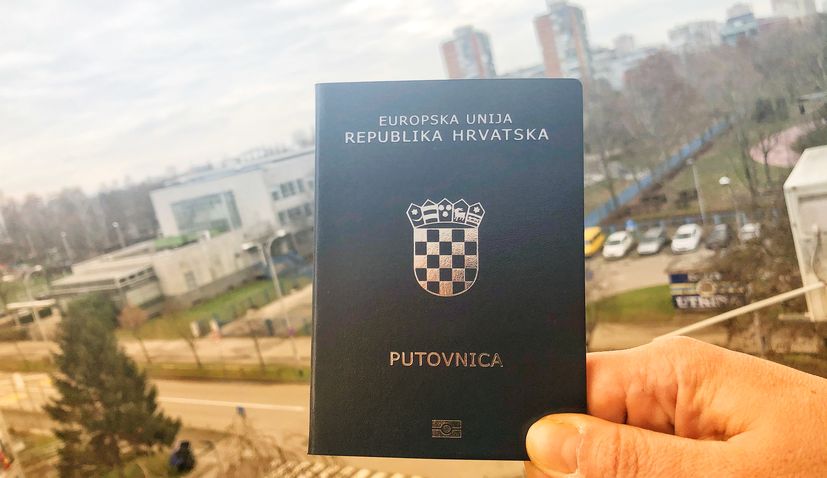
Croatian passport
ZAGREB, 24 Dec (Hina) – Croatia has reached seventh place in the global ranking of passport strength, according to the latest update of the Henley Passport Index in December.
The ranking is based on data from the International Air Transport Association (IATA), with passports ranked according to the number of destinations their holders can access without a visa.
All data are further verified and updated by Henley & Partners’ research team.
Each destination earns one point if access is visa-free or if a visa can be obtained on arrival.
The total points determine the ranking, with no subjective factors such as economic strength or safety. The index is updated quarterly.
With 184 points, Croatia shares seventh place with Australia, the Czech Republic, Estonia, the United Kingdom, and the United Arab Emirates. Canada, for example, is ranked eighth.
The United States is in eleventh place with 180 points.
Singapore remains in first place with 193 points, holding the top spot for years thanks to strong diplomatic ties and economic power, which allows its passport holders access to nearly the entire world without a visa.
South Korea ranks second, with its citizens able to travel to 190 destinations visa-free.
Japan is third with 189 points.
Fourth through sixth places are occupied by 21 European countries and New Zealand.
Among neighbouring countries, Slovenia and Hungary perform better, sharing sixth place with one point more than Croatia. Serbia ranks 35th with 137 points, Montenegro 41st with 129 points, and Bosnia and Herzegovina 45th with 123 points.
Afghanistan holds the last position with only 24 points, while Yemen, Iraq and Syria are also near the bottom.
The strength of the Croatian passport according to the Henley index shows a clear and continuous upward trend, particularly noticeable since Croatia joined the European Union.
Upward trend
When the Henley Passport Index began publishing rankings in 2006, the Croatian passport was relatively weak compared to today, and Croatian citizens had access to far fewer countries without a visa.
Before Croatia joined the European Union in 2013, the Croatian passport generally ranked in the lower third or fourth tenth of the global ranking, between 35th and 40th place.
Since then, EU membership has opened the doors to more visa-free arrangements, visibly increasing international mobility for Croatian citizens.
In the following years, the passport’s strength gradually increased. By 2016, Croatia had already reached 24th place, and by 2018 it achieved its best result at the time: 16th in the world, with access to 169 countries visa-free or with a visa on arrival.
During the pandemic period around 2020, there was a slight decline or stagnation, with the Croatian passport ranking around 20th, although the number of visa-free destinations did not decrease significantly.
Between 2021 and 2023, Croatia remained mostly between 17th and 18th place, showing stability but no major jumps.
A new significant rise occurred after Croatia joined the Schengen Area and the eurozone in early 2023. Since then, the Croatian passport has recorded its historically highest ranking.
In 2024, it entered the top 15 passports, and in 2025 it reached the top 10, with visa-free access to over 180 countries. This placed Croatia alongside the strongest European and global passports. Seventh place at the end of the year is its best result to date.
According to the index’s founders, Henley Passport Index data are used by governments and diplomats to monitor foreign relations and travel agreements, by tourism and international organisations to assess mobility, and by media and analysts to illustrate global connectivity trends.
They are also used by travellers and business people planning international travel, as well as by investors and consultants.
The Henley Index is the most widely cited global standard for measuring passport strength. The list’s creators emphasise that it does not measure living standards, wages, or quality of life, but solely freedom of movement.
Passport strength reflects how connected a country is to the world and how much other countries trust it.