Vjesnik Tower: The rise and fall of a media giant
- by croatiaweek
- in Entertainment
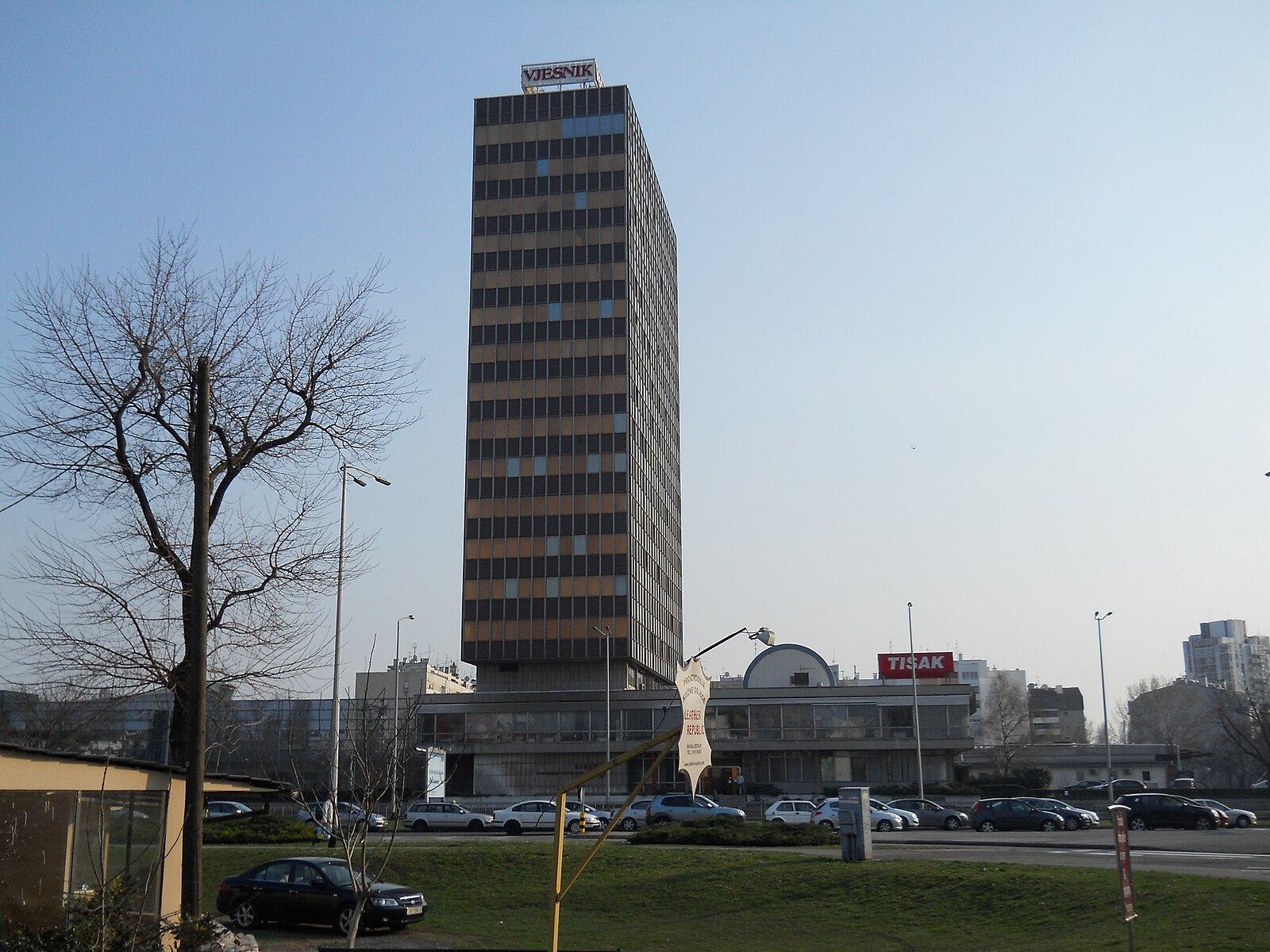
Vjesnik Tower (Photo: DAVID HOLT/CC BY-SA 2.0)
ZAGREB, 19 November 2025 (Hina) –The dramatic fire that engulfed Zagreb’s Vjesnik Tower on Monday night reignited memories of a building once considered the beating heart of journalism.
Far more than a landmark on Slavonska Avenue, the tower was the headquarters of NIŠPRO Vjesnik, the most powerful publishing house in Southeast Europe during its peak in the 1980s.
At the height of its influence, Vjesnik employed nearly 6,000 staff and sold more than 200 million newspapers a year, figures that placed it among the largest publishing operations in Europe.
The vision for the Vjesnik complex was shaped in the early 1950s by Đuro Kladarin, a former Partisan general who became director of Vjesnik in 1953.
Convinced that Zagreb’s fragmented editorial offices and outdated printing facilities had no future, he launched an ambitious plan to unite the entire operation under one roof.
The cornerstone of the tower was laid in 1959, marking the beginning of a transformative expansion.
Smaller publishing houses were merged into Vjesnik, and several new titles were launched, among them Arena, Globus, and the widely read Večernji list, which quickly became the company’s flagship newspaper.
Designed by architect Antun Ulrich, the Vjesnik Tower was purpose-built for large-scale newspaper production.
By 1972, the first editorial teams moved in, and Vjesnik’s influence grew rapidly, both within Yugoslavia and across Europe.
By the mid-1980s, Vjesnik had become the leading media house in Yugoslavia, surpassing even Belgrade’s heavyweight publishers Politika and Borba.
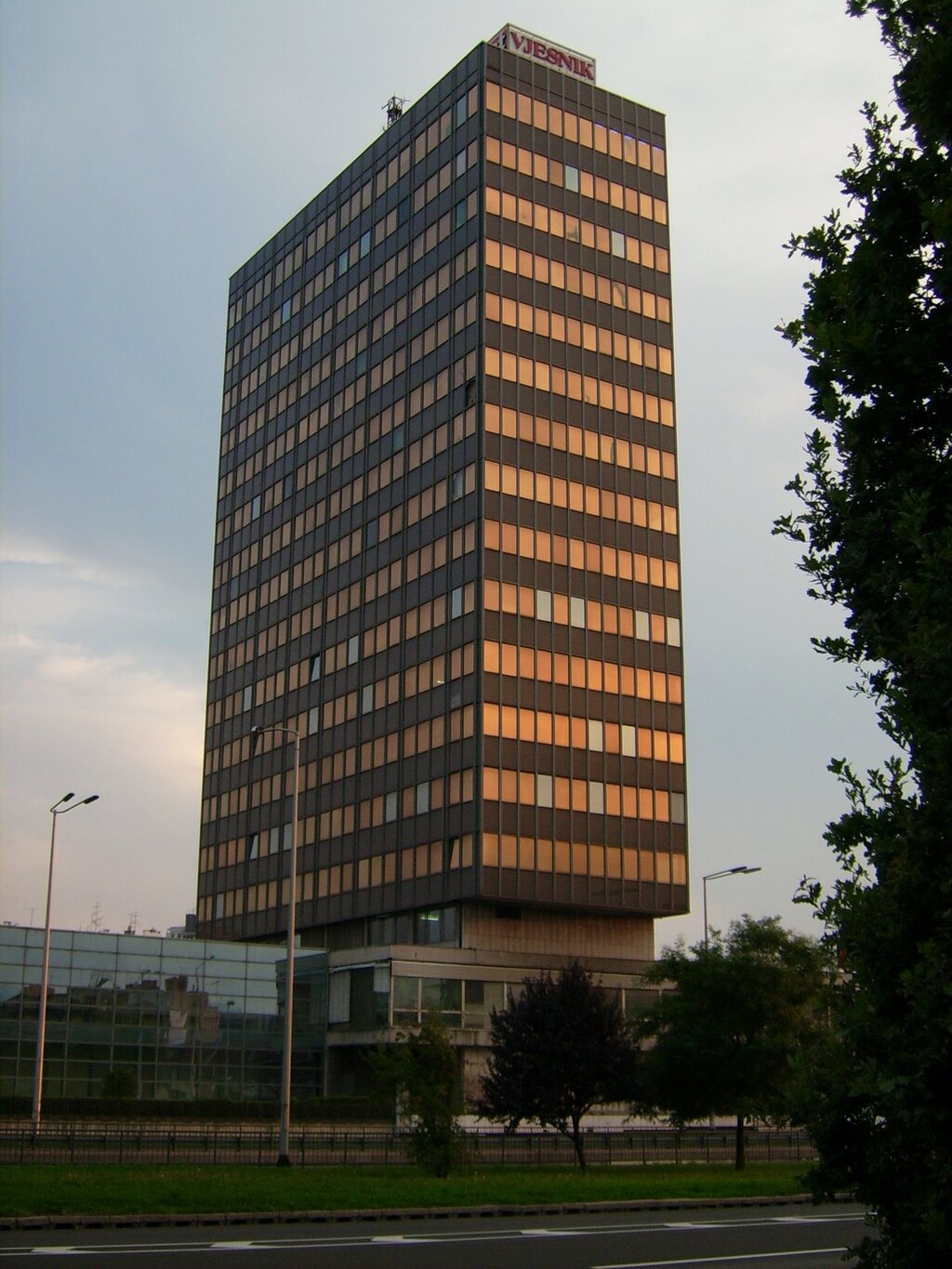
The building was built in 1972 (Photo: Ivan Žužak/CC BY 3.0)
In 1984, it printed and sold more copies than any competitor in the country.
The numbers from this era are still striking. In 1985, Vjesnik printed more than 267 million newspapers and sold over 223 million — averaging more than 600,000 copies sold every day.
For the region, these figures were unprecedented.
The company’s prestige reached its peak during the 1987 Zagreb Universiade, when Vjesnik’s publications dominated the media coverage of the international event.
In 1988, Vjesnik underwent a major reorganisation, adopting digital technologies and modernising its printing operations in Zagreb, Frankfurt, and Osijek.
Editorial offices of Večernji list, Vjesnik, Sportske novosti and others moved into a newly built Press Centre beside the tower, and NIŠPRO Vjesnik was officially formed.
That same year, the company printed more than 243 million issues, selling over 195 million, and operated a network of 1,150 kiosks across the country. More than 34,000 tonnes of paper were used annually.
However, the company’s expansion coincided with a shifting political landscape. The break up of Yugoslavia and the beginning of privatisation ushered in a rapid decline.
By the early 2000s, major outlets such as EPH and Tisak had left the complex. Večernji list moved out around 2010, and the long-running newspaper Vjesnik ceased publication in 2012.
The printing house Vjesnik d.d., once the backbone of the operation, entered liquidation in 2022.
Until Monday’s fire, the only media tenant remaining in the building was Laganini FM, which has now suspended broadcasting due to the damage.
This week’s devastating fire is not the tower’s first brush with catastrophe. During the 1964 Zagreb flood, the Vjesnik complex suffered extensive damage.
Newsrooms, printing facilities, administrative offices, and paper storage areas were destroyed as water poured into the building in the early hours of 26 October.
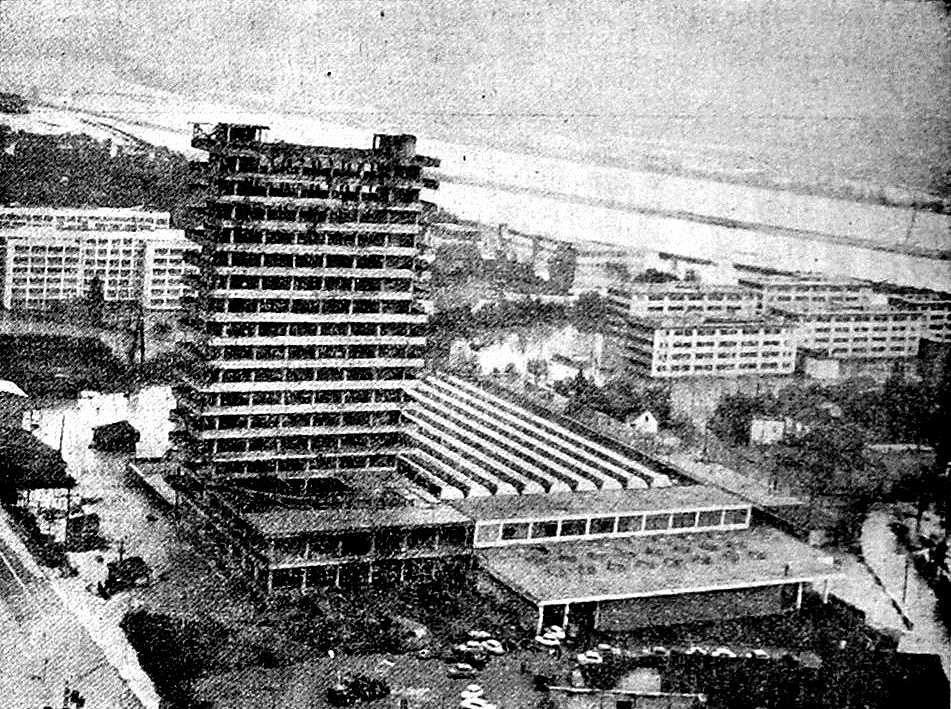
Durirng the 1964 Zagreb flood (Photo: Vjesnik/Večernji list/Public domain)
Around 200 employees worked through the night in a desperate attempt to protect the facilities.
Despite its decline, Vjesnik’s legacy remains significant. In 2000, the respected Vjesnik reporter Đorđe Zelmanović summarised its importance with a simple yet powerful comparison: alongside Germany’s Axel Springer group, Vjesnik had been one of the largest and most expansive publishing houses in Europe.
“Some may think of Vjesnik as they wish,” he wrote, “but in terms of scope, the range of publications, and printing capacity, few could compete with it.”
For many, the Vjesnik Tower stood as a symbol of Croatia’s journalistic heritage, a reminder of an era when Zagreb was at the centre of a vast media network.
As the city now assesses the damage from the fire, it also reflects on the extraordinary story of the tower and the publishing empire it once housed.