Rapid spread of invasive alga off the Croatian coast
- by croatiaweek
- in News
(Illustration)
The Institute of Oceanography and Fisheries has reported the alarming spread of a new, highly invasive brown alga in Croatian waters.
The species, Stypopodium schimperii, originally comes from the Indian Ocean and likely entered the Mediterranean Sea through the Suez Canal.
It was first recorded in Israel in 1973 and has since been spreading through the eastern Mediterranean, including Greek waters in the Aegean and Ionian Seas.
This invasive alga was first spotted in Croatian waters in autumn 2020 near Komiža on the island of Vis. At that time, scientists found only a few specimens.
However, within just a year, its population had exploded into the thousands.
The most recent research, conducted at the end of May 2022, has revealed the full extent of the situation. In many locations around Komiža, the alga now covers 100 percent of the seabed, particularly in rocky areas at depths between 5 and 15 metres. It is completely displacing native marine species in the process.
Experts from the Institute warn that Stypopodium schimperii currently holds the highest invasive potential of any non-native alga in Croatian waters.
Although it remains uncertain whether the species will continue spreading throughout the Adriatic or if its population will stabilise or even retreat, as sometimes happens with newly introduced species, the situation is being closely monitored.
Divers and sea lovers are being asked to assist researchers by reporting any sightings of the alga beyond the Komiža area.
Underwater photographs or samples would be especially helpful for further identification and tracking.
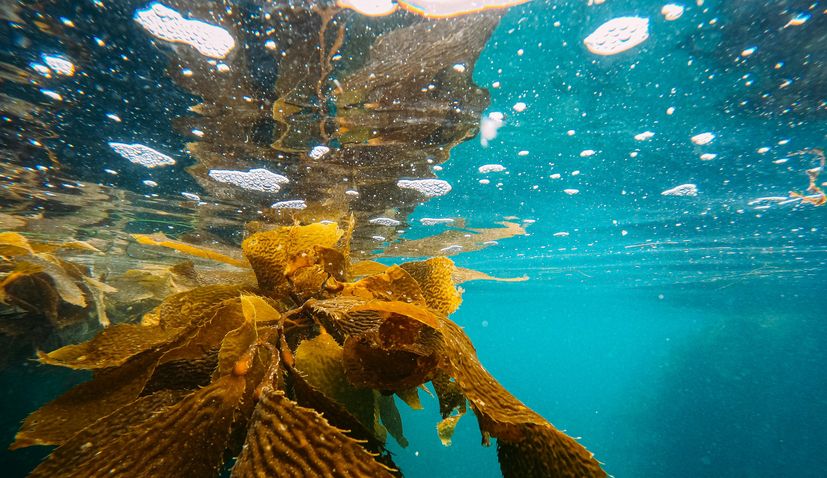
The alga resembles the native Padina pavonica, but there are key differences. Stypopodium schimperii is ochre-coloured, sometimes with a bluish sheen, and can grow over 40 centimetres in size.
In contrast, the native species is white and rarely exceeds 20 centimetres.
This discovery is part of ongoing research within the “Benthic NIS” project (IP-2019-04-6702), funded by the Croatian Science Foundation.
Anyone spotting this species is encouraged to report it to help scientists understand and respond to this growing environmental concern.