New €2.5 billion rail link to Rijeka moves forward
- by croatiaweek
- in News
ZAGREB, 14 December 2025 (Hina/CW) – Croatia’s long-awaited lowland railway connection to Rijeka has entered a decisive new phase, with active design and preparatory construction now underway and all financial requirements secured through to 2028.
The update was announced in Zagreb on Monday at the Projects Days conference, organised by IPMA Croatia (International Project Management Association), a leading professional gathering focused on major infrastructure and public-sector projects.
Deputy Prime Minister and Minister of the Sea, Transport and Infrastructure Oleg Butković described the lowland railway as Croatia’s most important strategic infrastructure project for the coming decade, with an estimated value of more than €2.5 billion.
“This project has been talked about for many years, but it is now finally moving into active implementation,” Butković said. “The lowland railway will play a decisive role in positioning Croatia as a European transport gateway.”
According to the minister, the full potential of the Port of Rijeka, one of the Adriatic’s most important ports, will only be realised once the new railway connection is completed.
The lowland railway link to Rijeka will link central Croatia with the Port of Rijeka on the northern Adriatic, creating a faster, flatter and more efficient route for both freight and passenger transport.
Unlike the existing mountainous railway, the new line is designed with gentler gradients and higher capacity, allowing longer and heavier freight trains to operate more efficiently.
Running as part of the core European TEN-T transport network, the railway will directly connect Rijeka with Zagreb and onward to Central and Eastern Europe, significantly strengthening Croatia’s role as a key entry point for goods into the EU.
Once completed, the project will dramatically improve logistics, boost the competitiveness of the Port of Rijeka and reduce transport times and costs across the region.
Butković highlighted that 2025 has been a significant year for Croatian infrastructure. Among the major projects completed are the Rijeka Gateway port development, the renovation of the second tube of the Učka Tunnel, and the completion of the 5C Corridor through Slavonia.
“When it comes to road, motorway, air and port infrastructure, Croatia today ranks among the top countries in the European Union in terms of coverage and development,” he said, adding that EU membership and access to European financial instruments have been crucial in achieving this progress.
Major Investment in Railways
Beyond the lowland railway, Croatia is currently in the midst of a large investment cycle in rail infrastructure, with more than €1.5 billion being invested in upgrades and reconstruction nationwide.
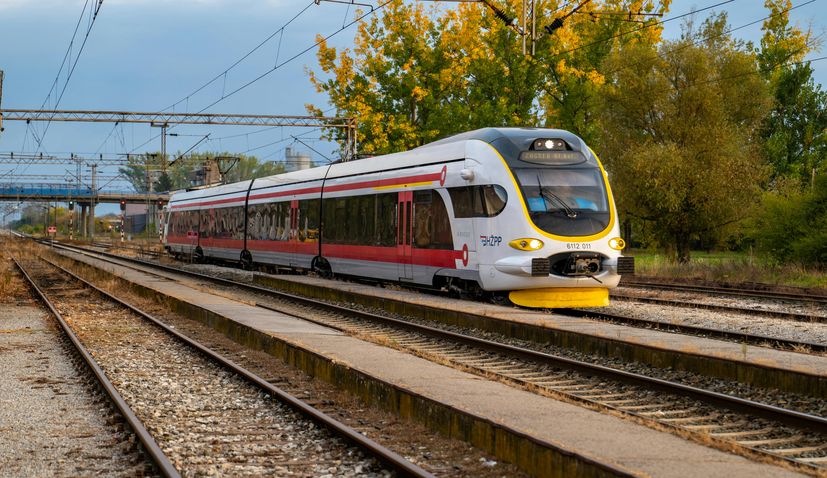
The passenger rail fleet has also been significantly modernised. HŽ Passenger Transport now operates around 70 new trains, including Croatia’s first battery-powered and electro-battery trains.
Despite this progress, Butković stressed that the pace of major projects must be accelerated to meet future transport and economic needs.
Looking ahead, the government plans to renew the former Corridor 10 towards eastern Croatia, as well as to reconstruct or build new railway lines towards southern Croatia, including connections to Split and the port of Ploče.
The Projects Days conference brought together representatives from the public sector, investors, engineers and project managers, focusing on complex infrastructure projects and effective public project management.
Mladen Vukomanović, President of IPMA Croatia, said the association now brings together more than 500 professionals, acting as a vital link between strategic planning and project execution.
“Projects are what bring change. We advocate sustainable change and a better society,” Vukomanović said.
He added that Croatian experts are closely following major international projects, including an €8 billion railway project in Egypt spanning 2,000 kilometres, in order to gain valuable experience in financial and contractual models that will be important for Croatia in future EU funding periods.