How hard is Croatian to learn? Map sparks debate
- by croatiaweek
- in Entertainment
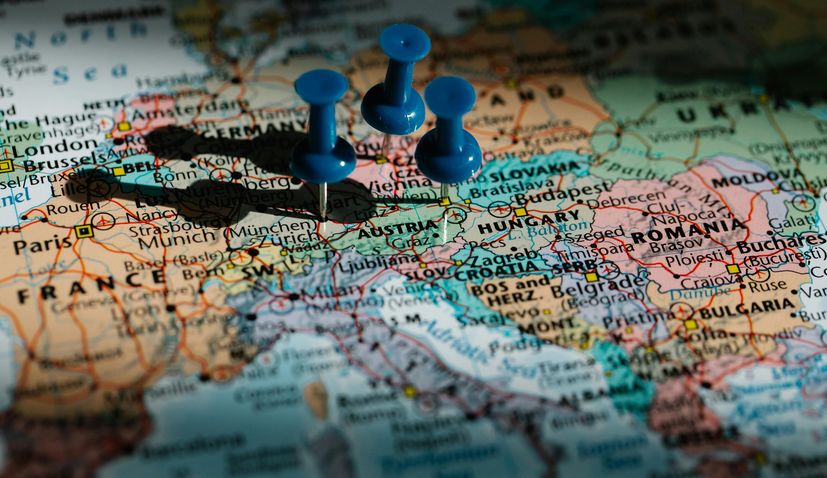
A resurfaced map circulating on social media has reignited debate by ranking countries according to how difficult their official languages are to learn, Index writes.
The map estimates the time needed to master each language and uses colour coding to show varying levels of difficulty.
The graphic is a slightly modified version of a map first published in 2017 and is based on data from the US Foreign Service Institute (FSI).
For over 70 years, the FSI has trained American diplomats and government officials for overseas postings. Importantly, all estimates refer specifically to native English speakers learning a foreign language.
European countries are divided into several categories based on the estimated time required to learn their official language:
• Green: Languages requiring fewer than 12 weeks of study
• Blue: Around 24 weeks of learning
• Orange: Approximately 30 weeks
• Red: More than 44 weeks of intensive study
• Black: No timeframe given – simply marked with the message: “Good luck”
Unsurprisingly, the United Kingdom and Ireland are the only countries shown in green, as English is the reference language used in the analysis.
Most of Western Europe appears in blue, representing languages of moderate difficulty. This group includes Romance languages such as Spanish, Portuguese, French and Italian, as well as Dutch and the Scandinavian languages (with the exception of Finnish). Interestingly, Romanian is the only Balkan language to fall into this category.
Germany and Austria are marked in orange. German, with its complex grammar and case system, is estimated to require around 750 hours of study, placing it in a category of its own.
Croatia, however, appears in the red category. According to the FSI, learning Croatian as a native English speaker requires approximately 1,100 hours, or 44 weeks of intensive study.
Croatian shares this category with languages such as Polish, Czech, Russian, Serbian and Greek, reflecting significant grammatical complexity, rich case systems and notable linguistic differences from English.
The greatest attention online has been drawn to the countries coloured black: Finland, Estonia and Hungary.
Their languages belong to the Uralic (Finno-Ugric) language family and are entirely unrelated to the Indo-European languages spoken across most of Europe.