Europe’s first battery-powered train enters daily service in Split
- by croatiaweek
- in News

(Photo: HŽPP)
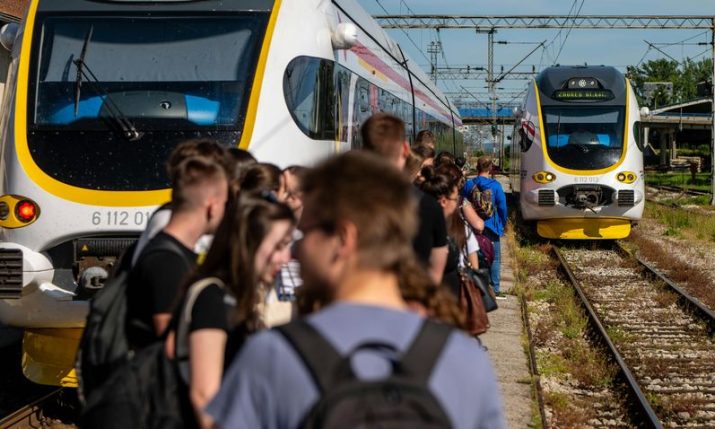
Croatia has marked a major milestone in sustainable transport with the introduction of its first battery-powered passenger train into regular service in Split.
From today, 15 December 2025, the new battery train is operating on the Split – Kaštel Stari – Split route, strengthening suburban rail services in the Split metropolitan area, Croatian Railways Passenger Transport (HŽPP) said.
The train was developed by Croatian manufacturer KONČAR as part of the project Application of Green Technologies in Railway Passenger Transport, financed through Croatia’s National Recovery and Resilience Plan 2021–2026.
Although the train has been in use since September for testing and trial operations on the Virovitica–Bjelovar line, the completion of a charging station at Split Predgrađe station has now enabled its full integration into daily suburban traffic.

(Photo: HŽPP)
State Secretary Žarko Tušek said the train represents a historic step for Croatian and European railways, describing it as the first fully battery-powered passenger train of its kind in Europe.
He highlighted ongoing investments in rolling stock, with 70 new trains already in service, 19 more under contract and plans for almost 40 additional trains, including battery and electro-battery models.
Tušek also confirmed that the Zagreb–Split railway line entered the TEN-T network in 2024, paving the way for EU-funded modernisation and shorter journey times in the future.

(Photo: HŽPP)
The introduction of the battery train has allowed HŽPP to add 14 new daily services between Split and Kaštel Stari.
From today, passengers can use a total of 32 suburban trains on this route. Two new stops, Sveti Kajo and Solin Širina, have also opened, improving access and encouraging commuters to shift from road to rail.

(Photo: HŽPP)
Split-Dalmatia County Prefect Blaženko Boban emphasised the benefits for residents, noting the train’s quiet, comfortable and emission-free operation, increased service frequency and improved local connectivity.
HŽPP CEO Željko Ukić said passenger numbers in the county continue to grow, with around 480,000 passengers expected this year, a six per cent increase on 2024. Further growth is anticipated as new lines and trains are introduced.

(Photo: HŽPP)
The €17.1 million project also includes an electro-battery train already operating between Zagreb and Bjelovar, as well as six charging stations nationwide.