Croatian property market sees big drop in sales
- by croatiaweek
- in News
Split
Croatia’s domestic property market has recorded a significant slowdown in sales, despite prices, particularly for new build, continuing to rise.
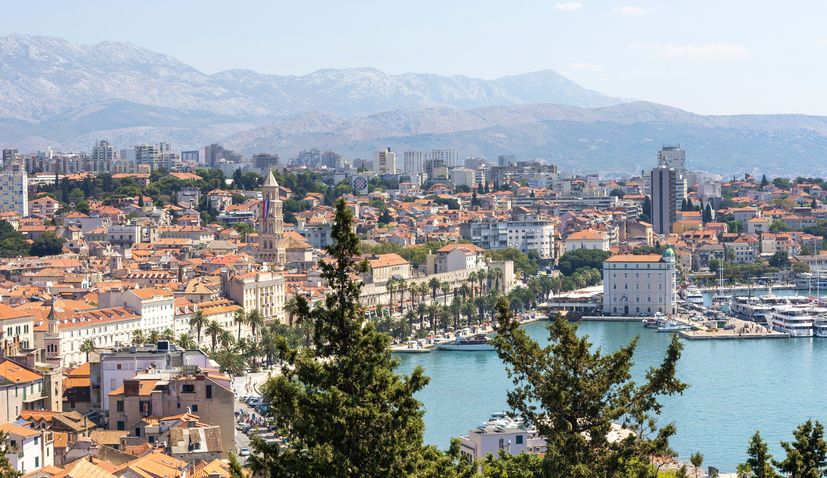
According to data reported by HRT, property transactions across the country fell by almost 15% in the first half of the year, with Split-Dalmatia County seeing the steepest decline at around 30%.
While demand has weakened, prices have not followed suit. This imbalance is increasingly reshaping buyer behaviour, especially among younger Croatians.
Ivan, a 27-year-old living in central Zagreb, says buying a home is not currently on his radar.
“I value the flexibility of renting more than having a mortgage hanging over my head,” he told HRT.
On average, around 27,000 flats are sold annually in Croatia, mainly in Zagreb and along the coast, where prices per square metre are also the highest.
However, analysts say unrealistic pricing has now begun to suppress demand. Sales in Zagreb and Istria are down by around 20%, while in Dalmatia, every third property on the market reportedly remains unsold.
Dubravko Ranilović, President of the Croatian Chamber of Economy’s Real Estate Association, believes the downturn is driven by broader economic factors.
“There is recession and global uncertainty, but above all, buyers are telling agencies that prices have simply gone too high,” he said.
Not all industry professionals see the situation as a crisis. Split-based real estate agent Anita Lozo describes the slowdown as a psychological adjustment period.
“The key issue is that prices of older properties have almost been equalised with new builds, which is not sustainable in the long term,” she said, adding that buyers are no longer willing to pay the same for outdated housing stock.
A similar trend is evident in Istria, where a price correction is also expected. Weaker demand is being linked to a drop in foreign buyers, particularly from Germany and Austria, traditionally key markets, both of which are currently facing economic uncertainty.
Agents also note that many property owners struggle to accept that their homes may not be worth what they expect, leading to unrealistic pricing.
Experts agree the market could stabilise if even a portion of Croatia’s estimated 600,000 empty private flats were returned to the market, increasing supply and potentially easing prices.