Croatian garlic on the comeback: One family’s mission to replace imports
- by croatiaweek
- in Business
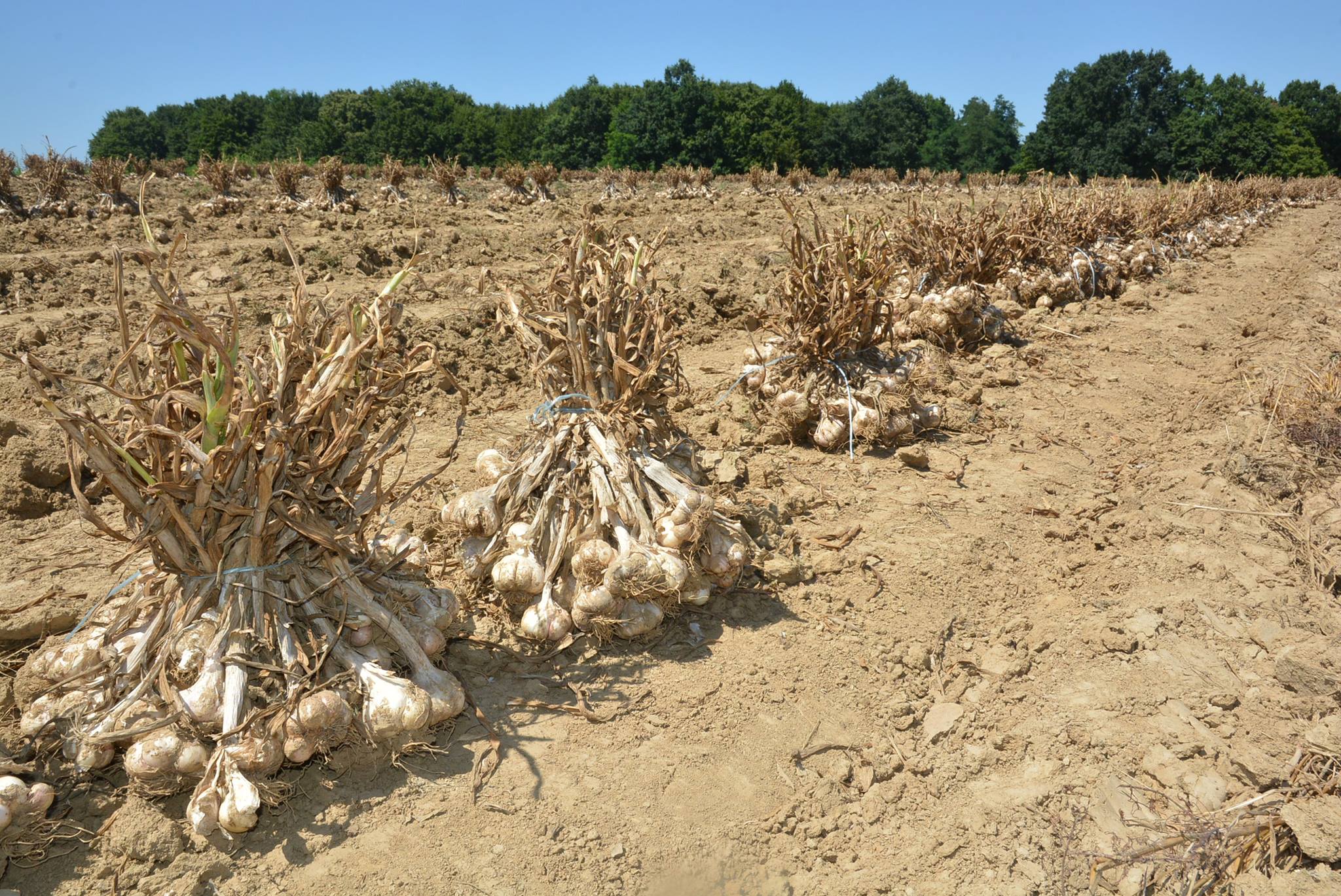
(Photo: Agro Puškarić Poljoprivredni Obrt)
Since Croatia’s accession to the European Union, domestic vegetable production has steadily declined while imports have soared.
In the past decade alone, the value of imported vegetables has risen by more than 150 percent.
Among the many imported products is garlic – a crop that could, and perhaps should, be grown at home.
But as HRT reports, not all hope is lost. In the fields of Moslavina, one family is proving that local garlic can thrive and even compete with foreign imports.
The Puškarić family, based in Kaniška Iva near Garešnica, is offering a different story – one of growth, resilience and revival of domestic agriculture.
Their farmland, stretching over 300 hectares, is filled with garlic, red onions and potatoes. A key factor in their success is an advanced irrigation system spanning several kilometres. With droughts and high temperatures becoming increasingly common, irrigation is no longer optional – it is essential.
“The early results from this year’s harvest are promising,” Filip Puškarić tells HRT.
“Fields with better irrigation gave us significantly higher yields. We are planning to drastically expand our irrigation capacity for the next season. Honestly, if we cannot irrigate it, it’s not worth planting.”
Their garlic crop has done particularly well – a crop the family turned to after growing tired of bland imported varieties. The Puškarić family is now able to produce enough domestic garlic to meet around 25 percent of the Croatian market’s needs.
“We started growing garlic back in 2014. It is something we want to continue developing. One day, it is entirely possible that we replace all imported garlic. The question is whether we will have access to enough quality land to achieve that,” says Marijo Puškarić, the head of the family agricultural business.
With large volumes of garlic and onions now being produced, the Puškarić family has entered major retail chains across Croatia.
They currently employ 30 local workers, and with more land, they believe they could expand production further and create additional jobs.
“Our onions gave us the best yield we’ve ever seen. For the first time, we organised the production of winter onions in the region of Srijem. The spring onions are also in top condition – maybe the best since we started growing them. It all comes down to experience, effort and of course, irrigation,” says Marijo.
This success story raises a key question: why not repurpose more agricultural land in Croatia for vegetable production? With high-quality, in-demand crops like garlic and onions being imported in large quantities, there is a clear opportunity for local producers to step in.
The Puškarić family’s model shows that with access to land, infrastructure and support, Croatia can reduce unnecessary imports and return to a stronger tradition of domestic farming.