Croatia confirms no troops will be sent to Ukraine after Paris meeting
- by croatiaweek
- in News
(Photo: MORH/ T. Brandt)
7 January 2026 – A high-level meeting of the so-called “Coalition of the Willing” was held this week in Paris, bringing together representatives from several European nations, the United States, and Ukrainian President Volodymyr Zelensky.
The central focus of the talks was international peace efforts aimed at ending the ongoing war in Ukraine. Participants discussed possible pathways to achieving a ceasefire, establishing a lasting truce, and creating a broad framework of security guarantees to protect Ukraine in the future.
Croatia was represented at the meeting by Prime Minister Andrej Plenković, who later spoke to the media about the significance of the gathering.
Plenković stressed that European countries remain ready to contribute to the coalition, but made it clear that each state would do so in its own way.
“Everyone will participate differently,” Plenković told HRT. “Some countries will contribute with their own forces. Others, such as Croatia, will not send soldiers onto Ukrainian territory.”
He added that Croatia would continue to support Ukraine through political and diplomatic channels, as well as with bilateral packages of military assistance.
The Croatian Prime Minister also emphasised the need to use the current political moment to push for real progress toward peace.
“What is important is to achieve a fair, lasting, and sustainable peace,” he said. “Negotiations with Russia will follow in order to try to take advantage of this political opportunity.”
Milanović Delivers Firm Response
Following the Paris talks, Croatian President Zoran Milanović addressed the issue directly on social media after reports emerged that certain countries, including France and the United Kingdom, were considering sending troops to Ukraine as part of post-war arrangements.
Milanović issued a long and strongly worded statement, underlining that Croatia would not be joining such initiatives.
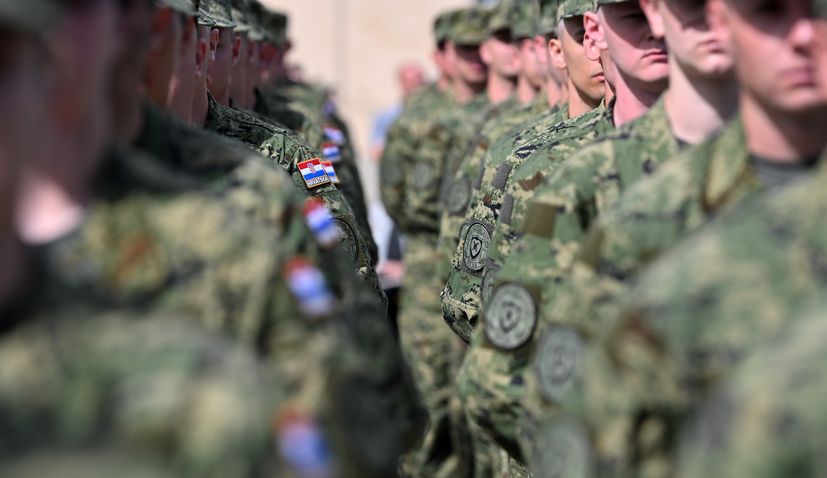
“As supreme commander of the Croatian Armed Forces, I am telling Croatian citizens – Croatia will not send its soldiers to Ukraine,” Milanović wrote.
He explained that decisions made within the “Coalition of the Willing” carry no formal obligation for Croatia or its military.
“Croatia is a member of the European Union and NATO and has only those duties that arise from membership in these alliances,” he said. “Actions of the Coalition of the Willing do not bind Croatia in any way.”
The President added that the main constitutional task of the Croatian Armed Forces is to protect Croatia’s sovereignty, independence, and territorial integrity.
Milanović also warned that any financial or military aid to Ukraine must not come at the expense of Croatia’s defence capabilities or the living standards of Croatian citizens.
“Assistance to Ukraine must not reduce funds needed for equipping the Croatian Army,” he stated. “Nor should such help be to the detriment of Croatian citizens and their standard of living.”
He concluded by reminding all state institutions of their primary duty.
“The obligation of all Croatian institutions is to care for national interests and the interests of our citizens.”
The Paris talks mark another step in international attempts to bring the conflict to a close. However, for Croatia, the position remains unchanged – help and solidarity, yes; troop deployment, no.