Croatia property prices in 2026: Land and labour costs to drive further growth, expert says
- by croatiaweek
- in Business
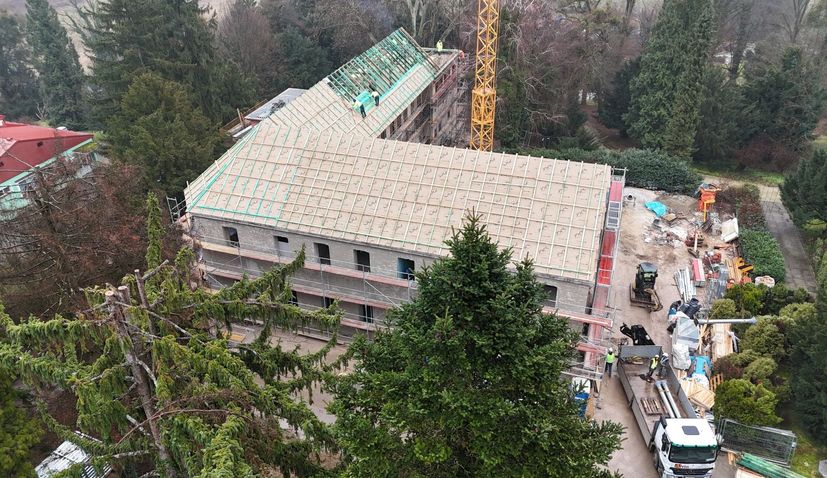
(Photo: DOMinvest / PROMO)
Croatia’s property market continued its upward trend in 2025, largely due to a persistent imbalance between supply and demand. Despite steady construction activity, the number of newly built homes remains well below real market needs, keeping prices under constant upward pressure.
In 2024, around 16,500 apartments were built across the country. By comparison, in the record year of 2007, Croatia saw approximately 25,000 new units completed, around 50 per cent more than today.
At the same time, overall demand and market liquidity are significantly higher than they were nearly two decades ago.
From the perspective of developers, construction input costs rose by around 10 per cent in 2025, closely mirrored by an average annual increase of roughly 12 per cent in apartment prices.
To better understand what lies ahead for 2026, Croatia Week spoke with Saša Perko, Master of Civil Engineering and Director of the DOMinvest group, who shared insights into the key factors shaping property prices, from building materials and land to labour and state regulation.
No Major Shock Expected in Construction Material Prices
According to Perko, there are currently no indications of dramatic price increases in construction materials in 2026.
“Current trends point to stable and moderate growth,” he explains. “Material prices are rising on a weekly or monthly basis, but at relatively small rates, broadly in line with general inflation of around four per cent.”
This marks a clear contrast to the sharp price spikes seen in 2022 and 2023. Today, Perko says, the real pressure comes from labour costs, which have become the dominant driver of rising construction expenses.
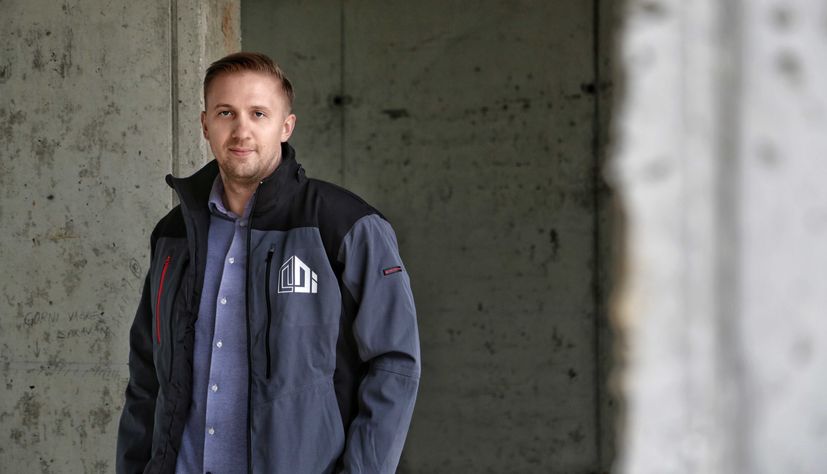
Saša Perko (Photo: DOMinvest / PROMO)
Urban Land Prices Set to Rise Further
While material costs may remain relatively stable, land prices, particularly in urban areas, are almost certain to rise.
“There is simply a lack of new building plots,” Perko says. “Urban planning restrictions, a more restrictive Zagreb General Urban Plan, limited infrastructure in wider city areas and strong investor demand all contribute to rising land prices.”
In short, available construction land is decreasing, while interest in development continues to grow—an equation that inevitably leads to higher prices.
Wage Growth Becomes the ‘New Normal’
Rising wages are another major factor shaping the market. Across Croatia, employers are competing fiercely for skilled workers, and construction is no exception.
“Annual wage growth of 10 to 12 per cent has effectively become the new normal,” Perko explains. “Wages are rising much faster than inflation, which directly feeds into higher construction costs and, ultimately, higher property prices.”
Why Property Prices Are Unlikely to Fall
When all cost pressures are taken into account, Perko is clear: a fall in property prices is highly unlikely.
“As long as demand exceeds supply, input costs will continue to rise,” he says. “Everyone involved in construction, from designers and engineers to carpenters, tilers and façade specialists, faces higher costs.”
While predicting exact figures is difficult, Perko believes a more sustainable annual price increase of 5 to 7 per cent would be healthy for the market.
“Anything above that risks exceeding buyers’ purchasing power and could lead to a sudden drop in demand, which would harm both the market and the construction sector,” he warns.
Although housing supply is slowly increasing, including affordable housing projects, it remains uncertain whether this will be enough to significantly slow price growth.
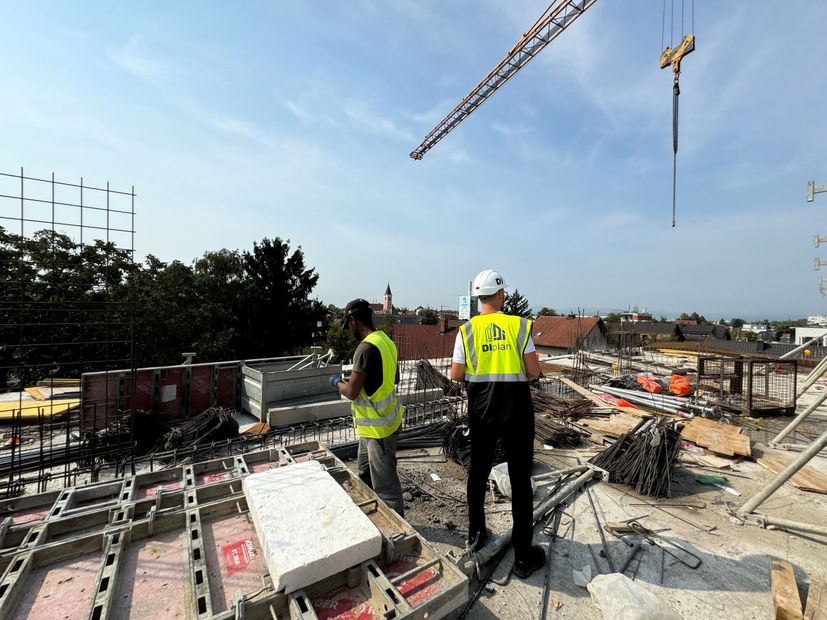
(Photo: DOMinvest / PROMO)
The State’s Role: Enable Supply, Not Set Prices
Many buyers ask whether the government should regulate property prices. Perko strongly disagrees.
“The state should never set the price per square metre,” he says. “History shows that excessive state intervention in the economy usually causes more harm than good.”
Instead, he argues, the government’s true role is to create conditions that allow faster and higher-quality construction, helping supply catch up with demand.
“This means simplifying and accelerating administrative procedures. Shortening project cycles would be the most effective form of state support,” Perko adds.
Cost Structure: Where the Price Increases Come From
Comparing costs with 2024, Perko notes that nearly all input expenses have risen:
• Land prices: up around 15%
• Design and supervision fees: up approximately 20%
• Construction costs: up about 15%
• Utilities, contributions and financing: largely unchanged
• VAT: remains at 25%, but its absolute value rises as prices increase
As a result, the overall cost structure per square metre has changed only slightly, but it remains firmly on an upward trend, one that Perko expects to continue into 2026.
Notably, around 35 per cent of the final apartment price still goes to the state, through VAT and other charges. While reducing this tax burden could improve affordability, Perko stresses it would not solve the core issue.
Labour Shortages and the True Cost of Foreign Workers
Labour shortages remain acute, with foreign workers now making up around 50 per cent of the construction workforce.
“There’s a common belief that foreign labour is cheaper, but in practice it’s significantly more expensive, often by more than 50 per cent,” Perko explains.
While hourly rates may be lower, additional training, slower work speeds and a higher error rate mean overall costs are substantially higher compared to experienced domestic workers.
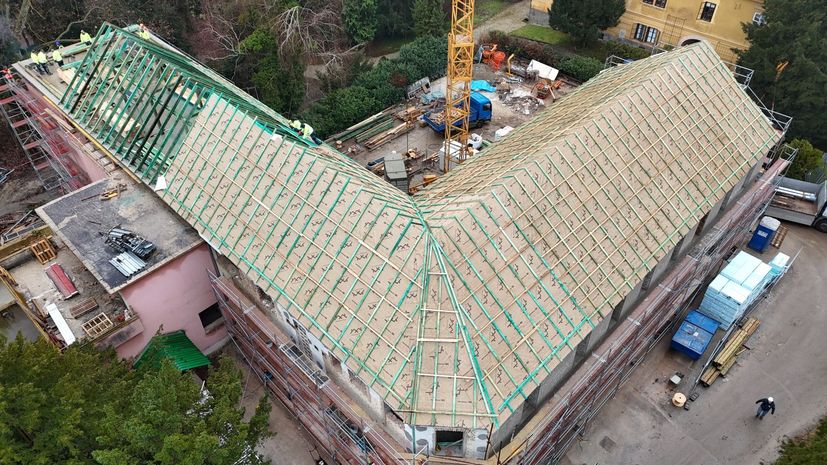
(Photo: DOMinvest / PROMO)
Productivity Is the Key to Lower Costs
Looking ahead, Perko sees the greatest opportunity for cost reduction in productivity improvements.
“The sector suffers from slow and complex administrative processes, as well as poor organisation within construction companies themselves,” he says.
A lack of defined processes, weak preparation and minimal digitalisation are widespread issues. Even before introducing automation or AI, Perko believes that basic structuring and standardisation of processes could increase efficiency by 10 to 20 per cent.
“That’s where real progress needs to happen,” he concludes.