New laws take effect in Croatia, speeding up home building
- by croatiaweek
- in News
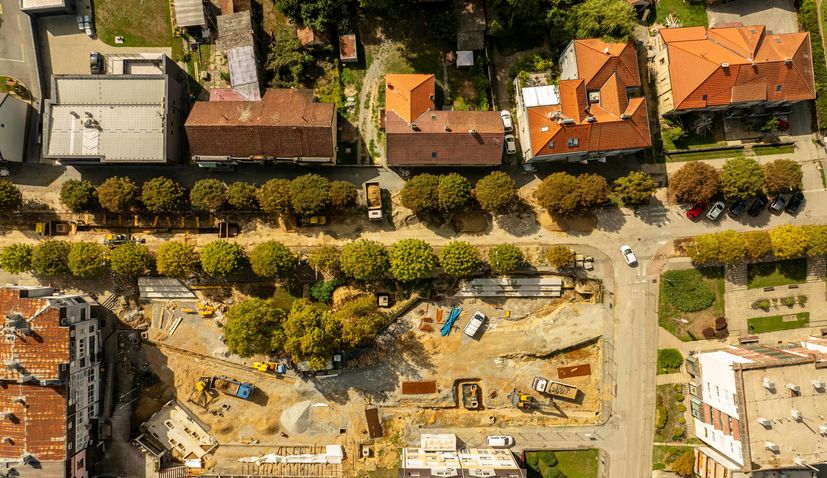
A new package of three laws from Croatia’s construction and spatial planning sector has officially come into force at the start of the year, bringing significant changes to how building permits are issued and how space is managed.
The most notable change affects those planning to build family homes. Under the new Building Act, obtaining a building permit should now be much faster and simpler.
According to Mario Todorić from the Croatian Chamber of Civil Engineers and the Croatian Centre for Earthquake Engineering, around 90 per cent of building permits in Croatia relate to family houses.
“For less complex buildings, a construction permit can now be issued based solely on an initial design,” Todorić told HRT, adding that this will significantly ease the administrative burden on public authorities.
In many cases, permits will now be issued within 30 days, a major improvement compared to previous procedures. The process for obtaining a use permit has also been simplified.
At the same time, the law introduces strict penalties for violations. Fines for illegal construction can range from €20,000 to €30,000, which authorities believe will significantly reduce unlawful building.
Spatial Planning Law Draws Mixed Reactions
While the Building Act has been widely welcomed, the Spatial Planning Act has sparked more debate.
The Ministry says the law is designed to better protect space and prevent uncontrolled development. One of the key changes is the introduction of mandatory expert studies before any amendments to spatial plans can be made.
“There can be no changes to spatial plans without first preparing expert documentation,” said State Secretary Tonči Glavinić from the Ministry of Spatial Planning, Construction and State Assets.
Another important change aims to prevent unnecessary expansion of construction zones, which the Ministry believes will better safeguard Croatia’s natural and urban environments.
Return of Urban Land Consolidation
After an absence of 11 years, the concept of urban land consolidation has been reintroduced. The measure has received mixed reactions within the professional community.
Hrvoje Vidović, President of the Urban Planning Committee of the Croatian Chamber of Architects, welcomed the move, saying fragmented land ownership has long limited quality urban planning.
“Without urban land consolidation, we are prisoners of complicated cadastral relationships, and plans cannot reach the quality they should,” Vidović said.
However, concerns remain over centralisation. Critics argue that some planning processes may bypass local authorities, despite their direct impact on residents.
“All spatial interventions affect local communities in one way or another, yet the law gives too much power to central authorities,” Vidović warned.
Zero-Emission Buildings on the Way
The third law in the package focuses on energy efficiency in buildings and introduces ambitious climate goals.
From 1 January 2028, all new public buildings in Croatia must be designed and built with zero emissions. This requirement will extend to all new private buildings from 1 January 2030.
In addition, the Ministry is required to prepare a national energy renovation plan for buildings by the end of the year, setting the direction for future upgrades to Croatia’s building stock.