How Croatian pensions compare across Europe
- by croatiaweek
- in News
As pension systems across Europe come under increasing strain from ageing populations, the gap between the continent’s wealthier north and its southern and eastern members has never been more visible.
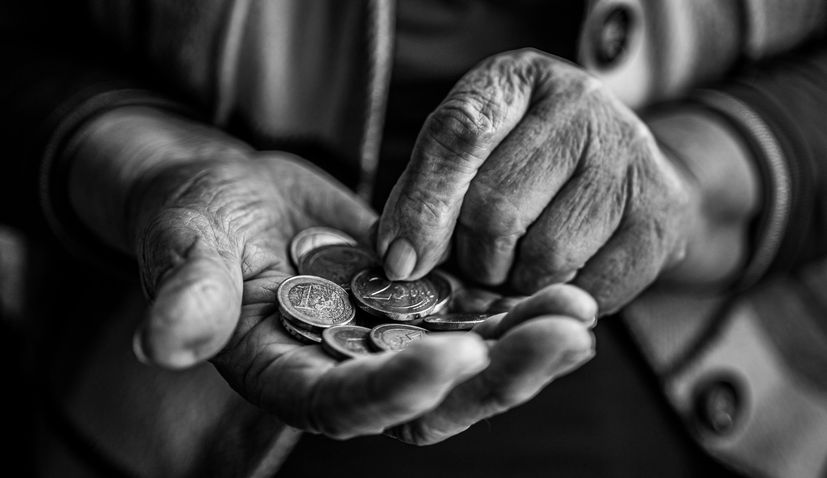
For some Europeans, retirement remains a period of comfort and security. For others, including many in Croatia, it is increasingly a daily struggle to make ends meet.
According to the latest Eurostat data analysed by Euronews, pensions have become one of the European Union’s most pressing macroeconomic challenges.
With people living longer and public finances under growing pressure, long-standing differences between national pension systems are becoming harder to ignore.
The comparison of average annual gross old-age pensions for 2023, the most recent year with full data available, reveals striking contrasts.
At the top of the list is Iceland, where pensioners receive an average of €38,031 per year. Luxembourg, Denmark and Norway follow closely behind.
At the other end of the scale, Turkey records the lowest figure at just €3,377 per year, while Bulgaria and Romania also sit near the bottom.
The average across the European Union stands at €17,321 annually, or around €1,443 per month before tax. However, this headline figure masks enormous inequality, with the highest pensions in Europe almost ten times larger than the lowest.
Nominal pension amounts, however, tell only part of the story. To understand how pensioners actually live, living costs, especially food prices, must also be taken into account.
Using the EU average as a base index of 100, Switzerland emerges as the most expensive country for food, with an index of 160. Iceland and Norway also sit well above the EU average.
This is where purchasing power standards (PPS) become crucial. When pensions are adjusted for cost of living, the gap between countries narrows.
Spain provides a good example: although it ranks only 13th in nominal pension amounts, it rises to fourth place in purchasing power terms thanks to significantly lower living costs than those in Scandinavia.
Pension systems across Europe, shaped by historical choices and political compromises, are now under severe pressure. Scandinavian countries and those in the Benelux region have managed to sustain higher pensions through a mix of strong public schemes and private funds.
Croatia firmly falls into this latter group. On Europe’s pension map, Croatia sits in the bottom third, ranking 28th out of 35 countries analysed.
The average annual pension in Croatia is just €5,570, placing it alongside Romania, Lithuania and Slovakia.
What makes Croatia’s situation particularly difficult is the cost of living, Lider.hr writes.
Despite low pensions, food prices in Croatia are almost exactly at the EU average. With a food price index of 100.7, Croatian pensioners pay similar prices to those in much wealthier countries, while receiving pensions that are roughly three times lower than the EU average.
This combination places enormous pressure on the living standards of older citizens. Unlike pensioners in Western Europe, Croatian retirees cannot rely on strong purchasing power or a wealthy domestic market to soften the blow of rising prices.
Experts warn that pension systems based on intergenerational solidarity are facing a stark mathematical reality. In the 1950s, around seven workers contributed to support one pensioner.
Today, the EU average has fallen to roughly three workers per pensioner, and by 2050 it is expected to drop further to just two.
Some countries are already feeling the full weight of this imbalance. Italy and Greece now spend more than 16 per cent of their GDP on pensions alone, leaving limited room for investment in education, innovation or long-term growth.
For Croatia, the challenge is clear. Without meaningful reform and a broader strategy to address both pension adequacy and living costs, the gap between retirement expectations and reality is likely to widen further.