The remarkable precision of Croatian family terms – and why many are being forgotten
- by croatiaweek
- in Entertainment

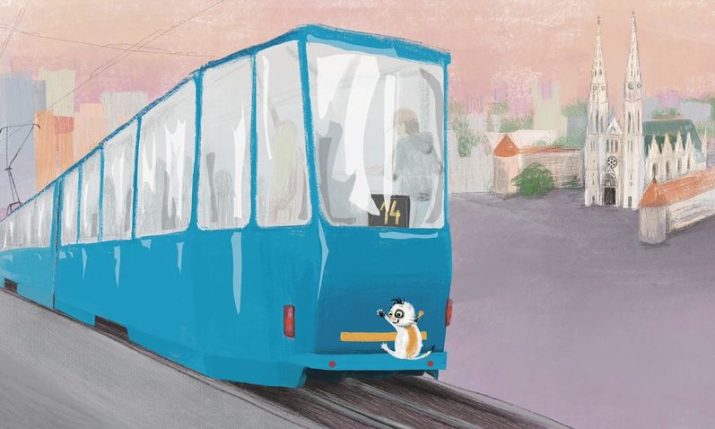
(Illustration)
From uncles and aunts to in-laws and distant cousins, Croatian has a term for almost every relationship, far more precise than English, as Dnevnik.hr explained in detail.
English may have nearly three times as many words as Croatian, but when it comes to family relationships, it is surprisingly imprecise.
Croatian, by contrast, possesses one of the most detailed systems of kinship terminology in Europe, a linguistic treasure that is slowly fading from everyday use.
In English, many relatives fall under broad labels such as “cousin” or “in-law”. Croatian, however, often conveys the same information with a single, highly specific word.
These terms can indicate not only the exact family connection, but also whether the relative comes from the mother’s or father’s side, and even the gender of the speaker.
Despite this, modern usage has become much simpler. Today, most cousins are casually referred to as bratići or sestrične, while brothers- and sisters-in-law are usually grouped together as šogori and šogorice.
Yet traditionally, Croatian has a precise term for almost every imaginable family relationship.
For example, a child of a father’s brother (stric) is not named the same way as a child of a mother’s brother (ujak). A son of an ujak is an ujaković, while the son of a mother’s sister (tetka) is a tetkić.
Even more strikingly, the same person can be called by different names depending on whether the speaker is male or female.
The complexity increases further when looking at siblings’ descendants. A brother’s son is a sinovac if the speaker is male, but a bratić if the speaker is female.
Add another generation, and the prefix pra- appears, creating terms such as prasinovac or prabratić.
Equally intricate is the vocabulary for in-laws (svojta). Croatian distinguishes clearly between a husband’s family (svekrbina) and a wife’s family (tazbina).
A wife’s father is a svekar, while a husband’s father is a punac or tast. There are also multiple words for the husband of a wife’s sister, including pašanac, badžo and paš – a level of nuance unknown in English.
Yet this linguistic abundance is gradually disappearing. Sociologists point to major social changes as the cause.
As people moved from villages to cities, large multi-generational households gave way to smaller nuclear families.
With fewer relatives living under the same roof, the practical need for such precise terminology declined.
What remains is a fascinating reminder of how language reflects social structure. Croatian kinship terms reveal a society that once placed great importance on extended family ties, a world where everyone had a clearly defined place, and a name to match.