Air quality in Croatia worsens as heating season begins
- by croatiaweek
- in News
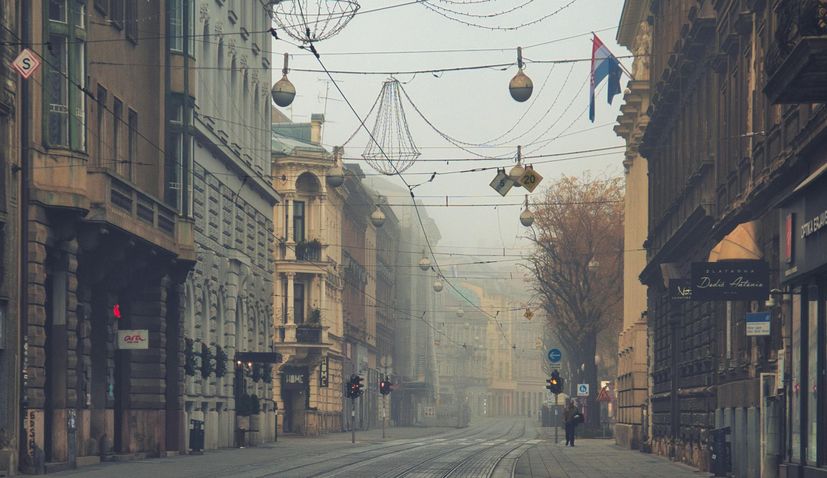
Zagreb
Air quality across large parts of Croatia has worsened noticeably in recent days, with a sharp rise in concentrations of airborne pollutants recorded as colder weather and the winter heating season take hold.
According to forecasts, conditions are expected to improve over the coming weekend.
Monitoring stations within the State Network for Continuous Air Quality Monitoring, as well as local stations across continental Croatia, have registered elevated levels of particulate matter (PM10 and PM2.5).
The highest readings were recorded in Zagreb, Sisak, Kutina, Koprivnica, Bjelovar and Slavonski Brod, where hourly values reached around 100 µg/m³ – several times higher than prescribed limits, Croatia’s Ministry of Environmental Protection and Green Transition said in a statement.
Unusually high concentrations were also detected at the rural background station in Desinić, where levels were two to three times above the norm.
This indicates that the current pollution is not only a local urban issue but a regional one, influenced by wider meteorological and emission patterns.
Seasonal Trend Linked to Heating and Weather Conditions
Experts describe the situation as a familiar seasonal pattern that recurs with the onset of colder weather. The main source of rising particle concentrations is emissions from small household heating systems, especially those burning solid fuels such as wood and coal.
The current spell of stable, windless weather has intensified the problem. Temperature inversions, often accompanied by fog, prevent vertical air mixing, causing pollutants to accumulate near ground level.
In urban areas, particularly Zagreb, road traffic adds an additional burden.
Although wood-burning remains the dominant source of particle pollution, stable winter conditions amplify the impact of all emission sources, including transport and industry.
Health Impact and Public Recommendations
While current pollution levels are not expected to trigger acute health problems, long-term exposure to elevated particulate matter increases the risk of respiratory and cardiovascular diseases and can shorten life expectancy.
Sensitive groups such as the elderly, children, adolescents, pregnant women and those with existing health conditions are particularly vulnerable.
Authorities recommend that citizens, especially chronic patients, older adults and children, limit time spent outdoors during periods of high pollution, particularly when engaging in physical activity. Although there is no need for alarm among the general population, responsible behaviour and awareness are encouraged.
Up-to-date air quality forecasts are available on the DHMZ website and the national Air Quality Portal, which provides real-time data through its air quality index.
The Ministry, together with relevant institutions and local authorities, is implementing a series of measures to reduce emissions through Air Quality Action Plans. These plans aim to gradually reduce pollutant levels, particularly in urban areas.
DHMZ is currently involved in several projects, including LIFE CityTRAQ and HORIZON NextAIRE, and is completing preparatory work for two major structural projects with the Ministry and the Institute for Medical Research.
These initiatives, focused on public education, citizen science, and modernisation of the national air quality information system, are expected to begin in January 2026 and will strengthen the country’s monitoring, forecasting and evaluation capabilities.
According to the latest forecasts, air quality is set to improve over the weekend as temperatures rise and south-westerly winds pick up, helping ventilate the interior. Warmer weather is also expected to reduce heating needs, easing pressure on emission levels and contributing to a noticeable drop in particle concentrations.