Croatians in the shadow at the O.K. Corral
- by croatiaweek
- in Entertainment
(Photos: Branka Bezic Filipoviić)
By Branka Bezic Filipoviić
In the dusty heart of Arizona, not far from the Mexican border, lies the legendary town of Tombstone.
Founded in 1879 by prospector Ed Schieffelin, the town took its name from a grim warning: friends had told him that the only “stone” he’d find there would be a tombstone, given the constant clashes with Apache tribes.
Instead, he discovered vast silver deposits, and the legend of Tombstone was born.
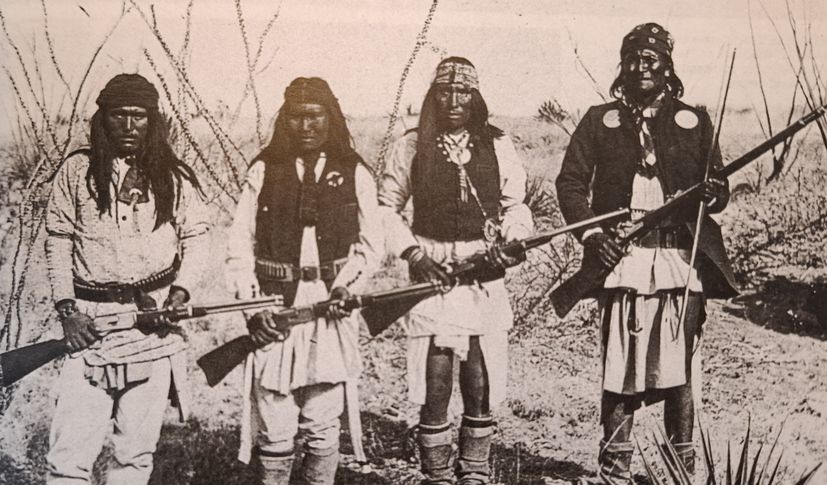
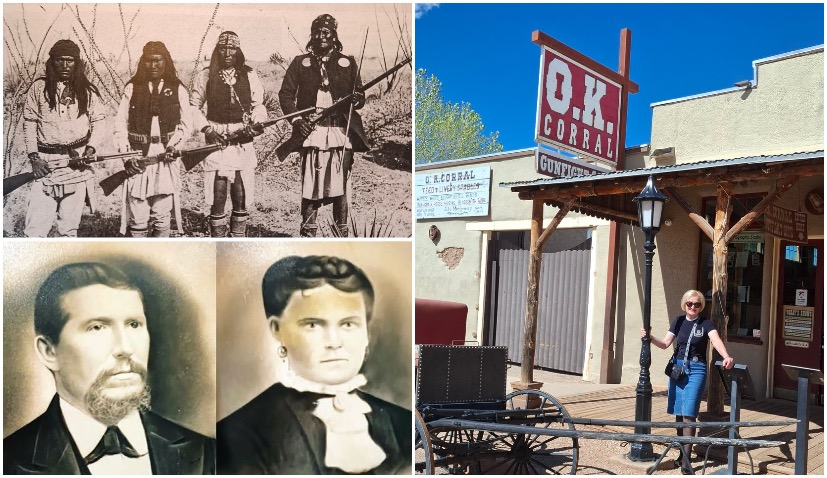
Apaches and Geronimo first on the right (Photo: Branka Bezic Filipoviić)
During the 1880s, its mines produced between $40 and $85 million worth of silver, making Tombstone the richest mining town in Arizona.
In just a few short years, it grew from a rough camp of 100 souls into a bustling city of 14,000. By contrast, today’s population barely exceeds 1,300.
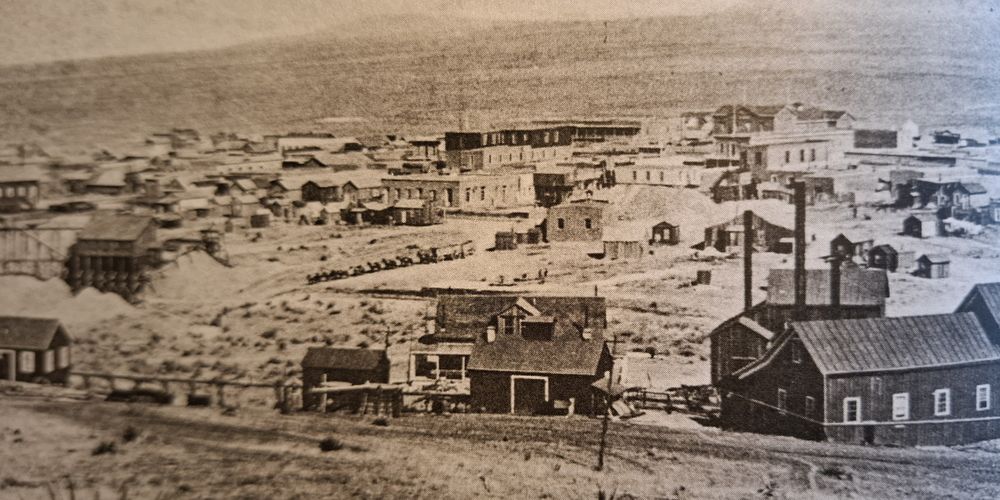
Tombstone in 1880 (Photo: Branka Bezic Filipoviić)
At its peak, Tombstone boasted over a hundred saloons, theatres, gambling halls, dance halls, and brothels. Newspapers such as The Nugget and The Tombstone Epitaph chronicled its wild life, the latter still in print today, making it Arizona’s longest-running paper.
The Bird Cage Theatre – “The wildest spot in the West”
While Tombstone had its churches and opera hall, the Bird Cage Theatre was its true heart of chaos. Described by The New York Times as “the wildest, wickedest night spot in the West”, it operated day and night, every day of the year, until closing in 1889.
The theatre still stands today, preserved almost exactly as it was. Sixteen murders are said to have occurred within its walls, and bullet holes remain as silent witnesses.
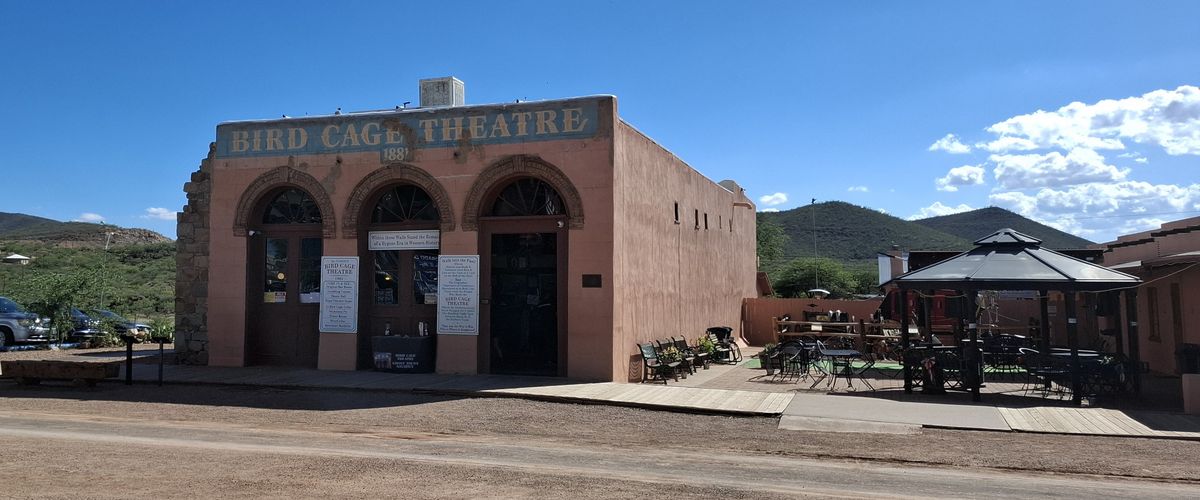
Bird Cage Theatre today (Photo: Branka Bezic Filipoviić)
It also hosted the longest-running poker game in history – an uninterrupted eight years, five months and three days of cards, whisky and gun smoke. What began as a theatre soon became a saloon, gambling den, dance hall, brothel and stage – all under one roof.
Fire, flood, and fortune’s fall
Life in Tombstone was sharply divided. Respectable ladies walked one side of Allen Street, while saloon girls and prostitutes kept to the other. European immigrants filled the mines, Chinese settlers ran laundries, and cowboys on the outskirts often raided Mexican ranches.
Two devastating fires (in 1881 and 1882) and flooding of the mines brought the silver boom to a halt. When global silver prices dropped, most residents packed up and left. Yet Tombstone refused to die, earning its enduring motto: “The Town Too Tough to Die.”
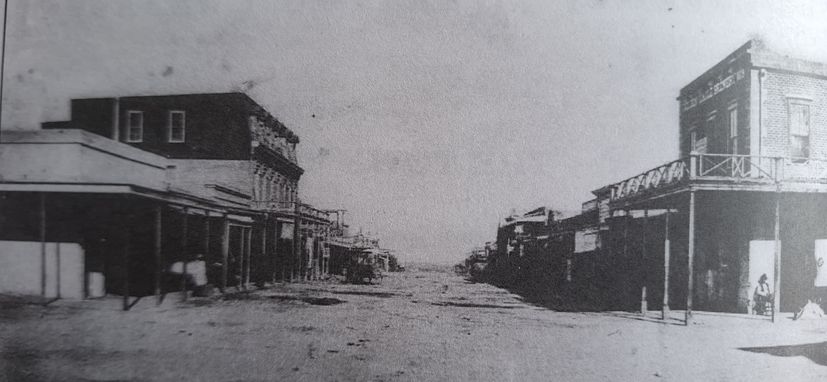
The main street in Tombstone back in the day (Photo: Branka Bezic Filipoviić)
The gunfight that made history
On 26 October 1881, a thirty-second gunfight in a narrow alley beside Fly’s photography studio entered Western legend.
The Earps, lawmen Virgil, Morgan and Wyatt, alongside gambler and dentist Doc Holliday, faced the outlaw McLaury and Clanton brothers near the Old Kindersley corral, known as the O.K. Corral.
The shootout was rooted in deeper political and economic rivalries: control over saloons, gambling, ranching, and the lucrative silver trade.
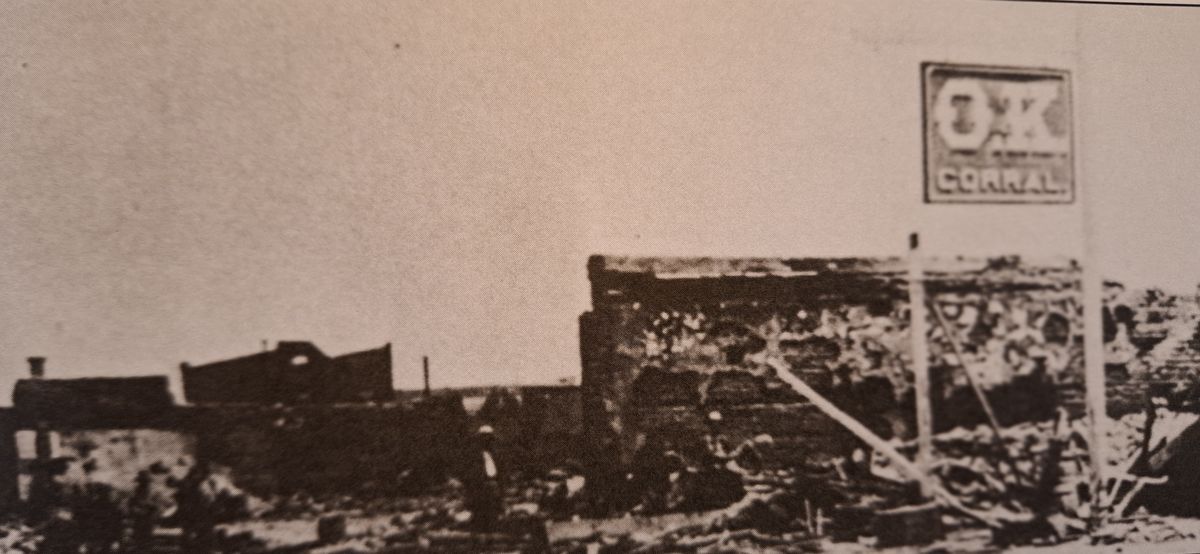
O.K. Corral after the fire (Photo: Branka Bezic Filipoviić)
Three cowboys were killed; two of the Earps wounded. Newspapers sensationalised the event, but the fallout was serious – foreign investors withdrew, plans for a local railway were abandoned, and Tombstone’s decline accelerated.
Curiously, when a later fire destroyed much of the town, the wooden “O.K. Corral” sign somehow survived, and still hangs there today.
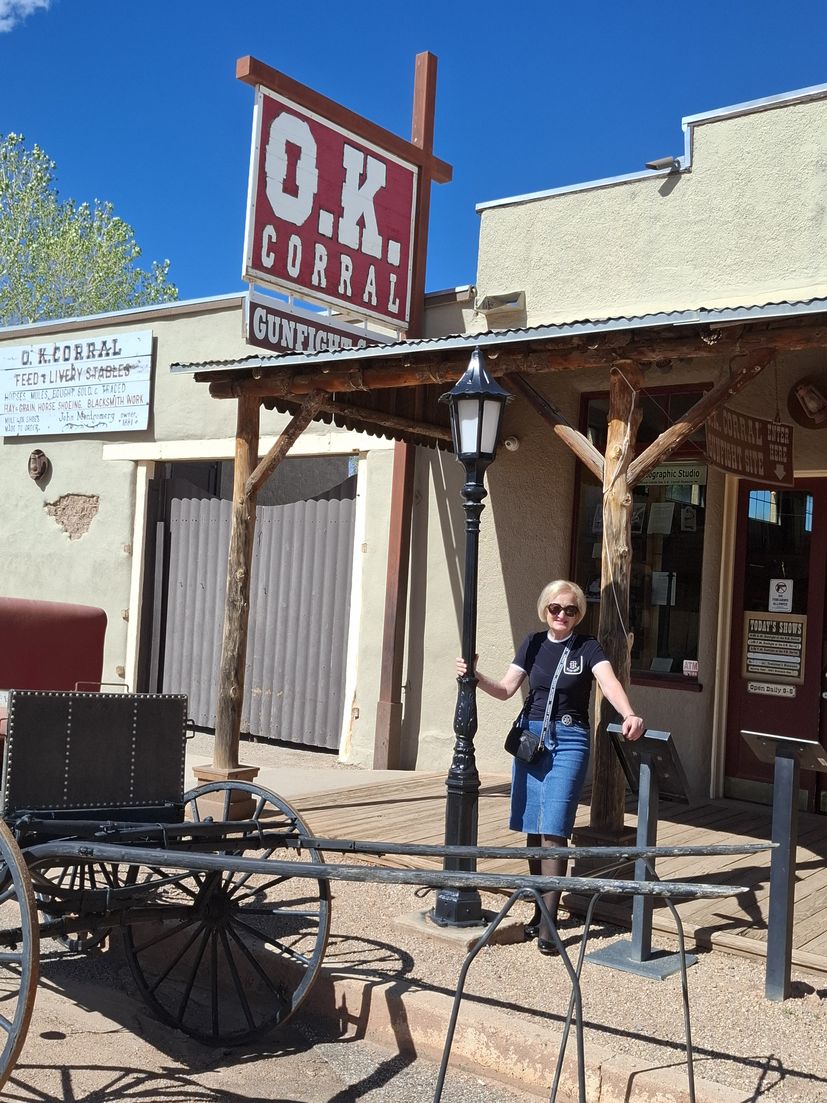
O.K. Corral today (Photo: Branka Bezic Filipoviić)
Croatians in Tombstone
Few know that Croatians were present in Tombstone during its most turbulent years. In the late 19th century, Arizona attracted immigrants from across Europe, including Dalmatia and Boka Kotorska.
The Great Register of Cochise County lists several Croatian miners among early residents. These include Stephen Crstovich (Stjepo Krstović) from Tivat, registered in 1880, and Christopher Bonacich (Krsto Bonačić) from Milna, listed in 1881.
Both lived in Tombstone at the time of the shootout.
Later records mention John Bogovich (Ivan Bogović), a cook registered in 1884, and Spiro Covacevich (Špiro Kovačević) from Stari Grad, a miner naturalised in Sierra Nevada in 1882. Although it’s unclear if they witnessed the gunfight itself, they were certainly part of Tombstone’s mining community during that era.
The enduring Berčić family legacy
The most documented Croatian settlers were the Berčić family, whose story was recently revisited by Alison Bunting in the Patagonia Regional Times (6 June 2025).
Nicholas Anthony Berčić (1838–1899) and his wife Kate (née Bonačić, 1854–1939) arrived in Tombstone in 1880, together with Nicholas’s brother John.
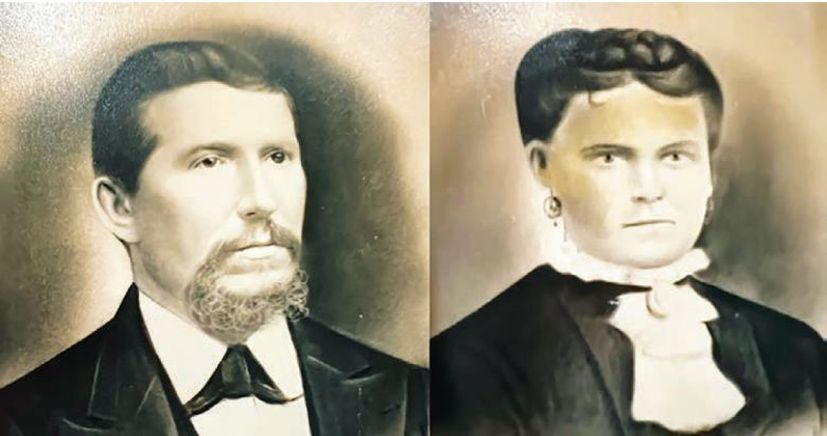
Nicholas and Kate Bercich in 1880 (Photo: Branka Bezic Filipoviić)
In 1884, the family purchased a ranch in the San Rafael Valley, supplying nearby mining camps and the military post at Fort Huachuca with livestock and produce.
Their ranch endured both hardship and hostility. A dispute with neighbour Colin Cameron led to a court case in Tucson in 1898, where Nikola was cleared of false theft charges.
Despite Nikola’s death in 1889, Kate continued to run the ranch and raise their six children.
Over generations, the Berčići became respected members of southern Arizona society.
Their descendants managed the Bercich Ranch and neighbouring Lone Mountain Ranch, with George Berčić even serving as Santa Cruz County Supervisor in the 1940s.
Today, 141 years later, the ranch still operates under the care of Bud and Carrol Bercich.
Patagonia, Arizona – a quiet corner of the frontier
Interestingly, the Berčić story continues in Patagonia, a small town of under 800 residents in southern Arizona. Though it shares a name with the South American region, local lore suggests that early miners from Argentina and Chile named it in memory of their homeland.
Patagonia today exudes a relaxed, communal spirit – with a school, small museum, live music at weekends, and even a café where dogs have their own regular spots.
The local museum proudly features the Berčić family among the area’s pioneer settlers.
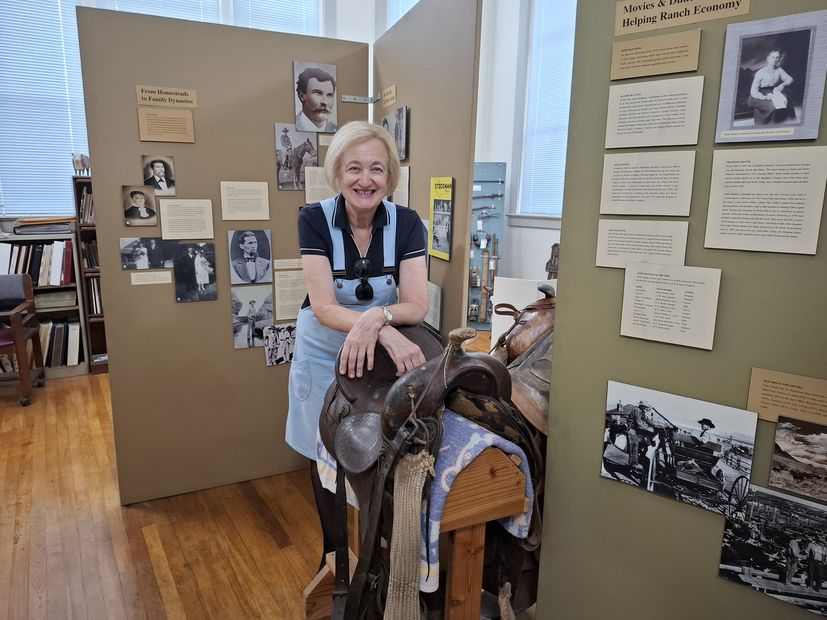
Patagonia museum (Photo: Branka Bezic Filipoviić)
Here, far from the bustle of Los Angeles or Tucson, life moves slowly, beneath vast desert skies. It is a place of peace, birdsong, and memory – where traces of Croatian heritage remain woven into the very fabric of Arizona’s frontier history.
From Dalmatia to the Wild West
The story of Croatians in Tombstone reminds us how far our people travelled in search of opportunity. While the O.K. Corral gunfight became legend, a quieter chapter unfolded alongside it, one written by miners, ranchers, and families whose roots reached from the Adriatic coast to the American desert.
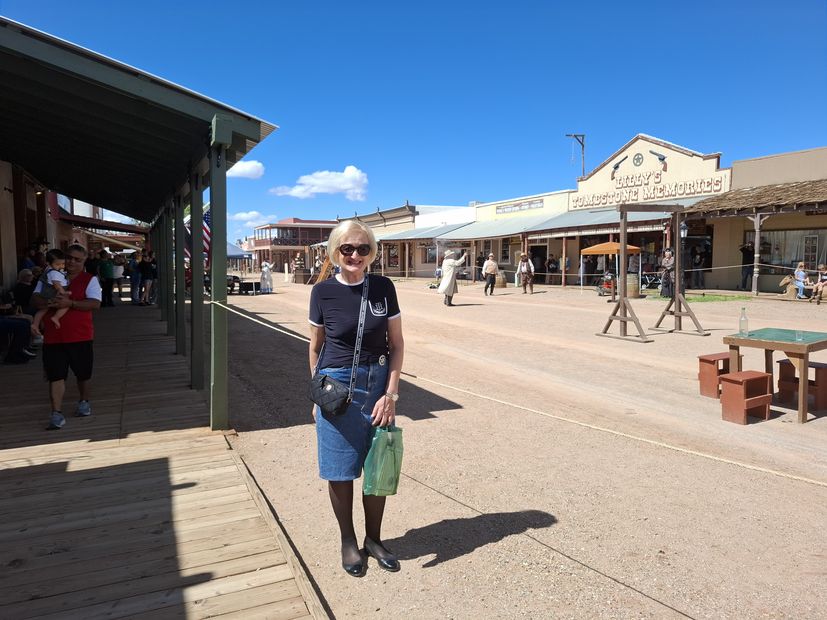
Tombstone main street today (Photo: Branka Bezic Filipoviić)
Their names, Krstović, Bonačić, Kovačević, Berčić, may not appear in Western films, but their legacy endures, part of the same untamed spirit that built the “Town Too Tough to Die.”