Croatia starts new Entry/Exit System for non-EU travellers today
- by croatiaweek
- in News
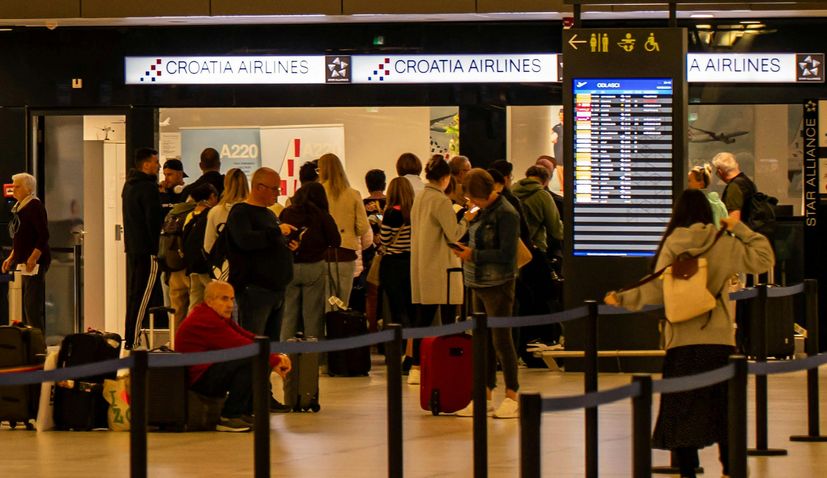
Zagreb Airport
ZAGREB, 12 October 2025 (CW/Hina) – As of today, Croatia has started implementing the European Union’s new Entry/Exit System (EES), a digital border management system for non-EU travellers entering or leaving the Schengen Area.
According to Croatia’s Ministry of the Interior, the system will be introduced gradually across all Croatian international border crossings, in line with the EU-wide rollout, and is expected to be fully operational by 10 April 2026.
How the New System Works
The EES replaces manual passport stamping with a digital registration process designed to enhance security and speed up border procedures.
Instead of border officers physically stamping passports, the system automatically records each traveller’s personal details, passport information, and entry and exit times.
It also logs any refusals of entry into Croatia or the wider Schengen Area.
On their first entry into Croatia or any Schengen country, non-EU nationals will be required to provide biometric data – four fingerprints and a facial photograph – in addition to their passport.
Children under 12 will be exempt from fingerprinting.
These details will be securely stored and used for future crossings.
At subsequent entries, border checks will verify a traveller’s identity by comparing a live facial image with the stored biometric profile, making the process quicker and more secure.
Who It Applies To
The new system does not apply to EU citizens, including Croatians, who will continue to cross borders using a passport or national ID card without submitting biometric data.
This rule also applies to EU citizens living in non-EU countries, as well as citizens of other EU member states.
Croatia will take a phased approach to implementing the EES. From 12 October until the end of November, biometric data will be collected for four hours daily, increasing to eight hours per day in November and twelve hours per day from December.
Self-service kiosks at major airports
Airports in Zagreb, Split, Dubrovnik, Pula, Zadar, and Rijeka will feature self-service EES kiosks for travellers entering the Schengen Area for the first time.
The process involves scanning the travel document, capturing facial and fingerprint data, and completing a brief questionnaire, available in 15 languages.
Possible delays at road crossings
Authorities have warned that border checks could initially take longer, particularly at road crossings, as first-time travellers will need to exit their vehicles for identity verification and creation of their EES record.
However, the MUP expects waiting times to decrease once the system becomes routine and more travellers have established their EES profiles.
Where to Find More Information
Further information about the Entry/Exit System, including its rollout schedule and detailed explanations for travellers, is available on the official EES website.