Croatian researchers among world’s most cited
- by croatiaweek
- in News
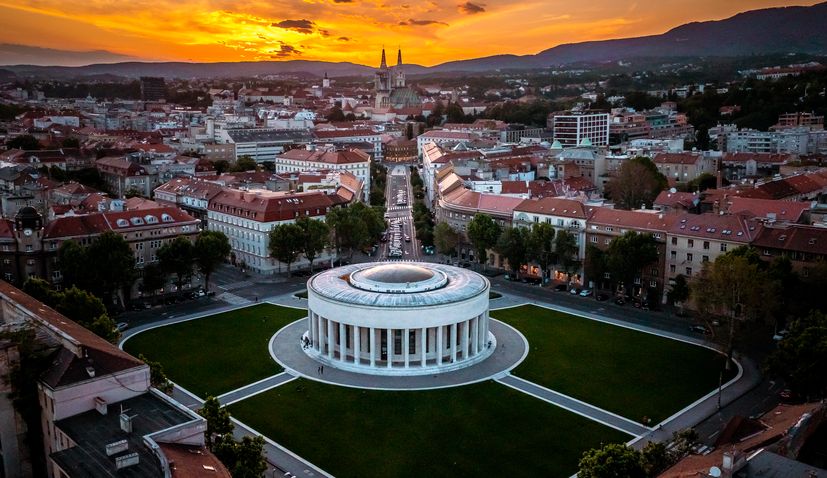
(Photo: J. Duval/Zagreb Tourist Board)
By Ivo Lučić
ZAGREB, 6 October 2025. (Hina) – A recent study by Stanford University has placed 130 Croatian scientists among the world’s top two per cent of most-cited researchers in 2024, with the University of Split taking the lead in quality, and the University of Zagreb in quantity.
The global list, compiled from the Scopus database up to the end of 2024, highlights researchers whose work has had the strongest impact across all scientific fields.
Of those, 97 Croatian scientists were recognised for lifetime achievement, while 130 made the annual list for 2024.
Two Unknown Names Lead Lifetime List
The highest-ranked “Croatian” scientist for lifetime impact is the late Charles M. Poser, a Belgian-born American neurologist famous for defining protocols in multiple sclerosis research.
His connection to Croatia, however, remains a mystery. Although listed as affiliated with Croatia’s Ministry of Health in Scopus, no official institution in the country could confirm any link to Poser.
The second-ranked researcher – effectively the top active Croatian – is Professor Frano Barbir from the University of Split’s Faculty of Electrical Engineering, Mechanical Engineering and Naval Architecture.
A pioneer in renewable energy and hydrogen fuel cells, Barbir spent much of his career in the United States and has earned global recognition, including Croatia’s State Science Award for Lifetime Achievement.
Despite his international reputation, Barbir was not elected to the Croatian Academy of Sciences and Arts (HAZU) in 2024 – a decision he criticised as favouring “mediocre” candidates with fewer citations and lower research impact. HAZU responded that all selections are made by secret ballot within its technical sciences division.
Split Leads in Quality, Zagreb in Scale
When focusing on the 2024 results alone, the University of Split boasts the country’s top three scientists – Sandro Nižetić, Frano Barbir, and Antonio Munjiza – all experts in technical sciences. They are followed by Zagreb economist Marina Dabić, Pula rector Marinko Škare, and interdisciplinary researcher Petar Jandrić from the Zagreb University of Applied Sciences.
In total, 72 of the 130 Croatian scientists on the list work at the University of Zagreb, confirming its dominance in national research output. Split follows with 14, the Ruđer Bošković Institute with 8, Rijeka University with 7, and Osijek University with 5.
Other institutions represented include the Croatian Catholic University, the University of North, HAZU, and the Sveta Katarina Hospital.
Biomedicine Dominates
Most of the listed Croatian researchers come from biomedical fields (50), followed by natural sciences (25) and technical sciences (22). According to academician Vlatko Silobrčić, this is to be expected: “Biomedicine and human biology are always among the most cited fields because they address global health issues.”
Silobrčić also emphasised that collaboration across disciplines is becoming essential in modern research: “Complex problems require teams of experts from different areas to bring multiple perspectives.”
Active Academics Beyond HAZU
While HAZU stated that 17 of its members appear on the lifetime citation list and 14 on the 2024 list, only a few are directly listed under the Academy itself. Many HAZU members continue to conduct research under university or institute affiliations, as most major projects require advanced equipment and facilities.
Among those included in the 2024 ranking are two Croatian rectors – Marinko Škare of the University of Pula and Nebojša Stojčić of the University of Dubrovnik – who are the sole representatives from their respective universities.