EU money slowing down – what’s next for Croatia after 2026?
- by croatiaweek
- in Business
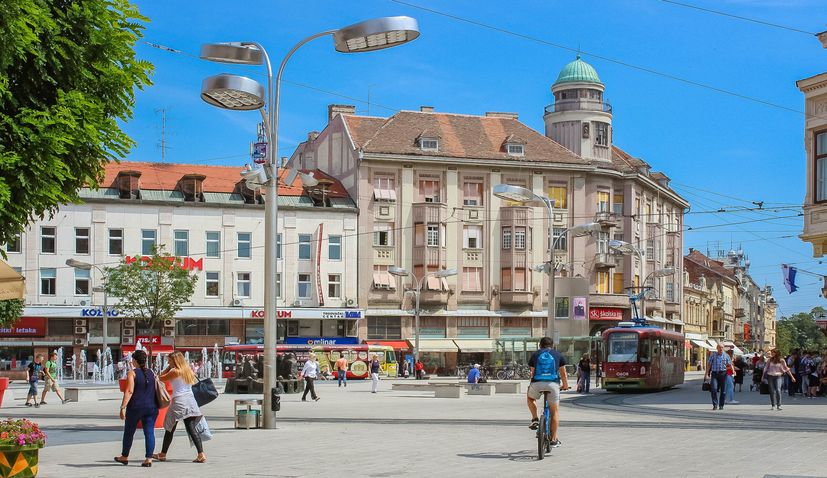
Osijek (Photo: Roko Poljak /CC BY-SA 4.0)
In just over three years, Croatia has withdrawn €4.5 billion from the EU’s Recovery and Resilience Facility – less than half of the total funds available.
To access the remaining €5.6 billion, Croatia must complete all the reforms and investments it set out in its national plan.
But with the clock ticking, meeting those goals is proving to be a tough challenge.
As Lider.hr reports, the sixth payment has already been delayed due to an unfinished reform of state-owned companies. And for the final four instalments, Croatia still needs to tick off 253 targets.
In comparison, 183 targets were met for the six previous instalments combined.
While some projects have already begun, time is running short. Beyond the question of how much money we’ll manage to use, there’s a bigger issue: what happens once this major funding source – and a key growth driver – dries up?
Croatia is performing relatively well compared to other EU countries when it comes to the National Recovery and Resilience Plan (NPOO). But that’s not the case with the ongoing financial framework (2021–2027).
Here, Croatia ranks third from the bottom, just ahead of Malta and Spain.
One of the biggest problems is the slow pace of calls for project proposals – especially for businesses.
According to Davor Nikolić, director of Omnia Solutions, so few calls have been issued that you could count them on one hand.
He warns that a sudden flood of calls later could overwhelm the system, creating bottlenecks and long delays in evaluations – which can already take up to a year.
Missed deadlines in the official calendar for publishing calls make it difficult for businesses to plan properly, he adds.
What about the future?
Looking at past EU contributions to the national budget, it’s clear that 2023 was the best year so far – Croatia received €4.6 billion. For 2024, the government expects €3.7 billion, though delays in the sixth payment may affect that.
In 2026, revenue is projected at €3.9 billion. But in 2027, that drops to just €2.6 billion, as NPOO payments will come to an end.
There are no official projections yet for 2028, as the EU’s next financial framework hasn’t been set. But the message is clear: as Croatia’s economy grows stronger, the generous flow of EU funds is likely to slow down.