One year on, how Rijeka Gateway is reshaping Croatia’s links to Central Europe
- by croatiaweek
- in News
(Photo: APM Terminals)
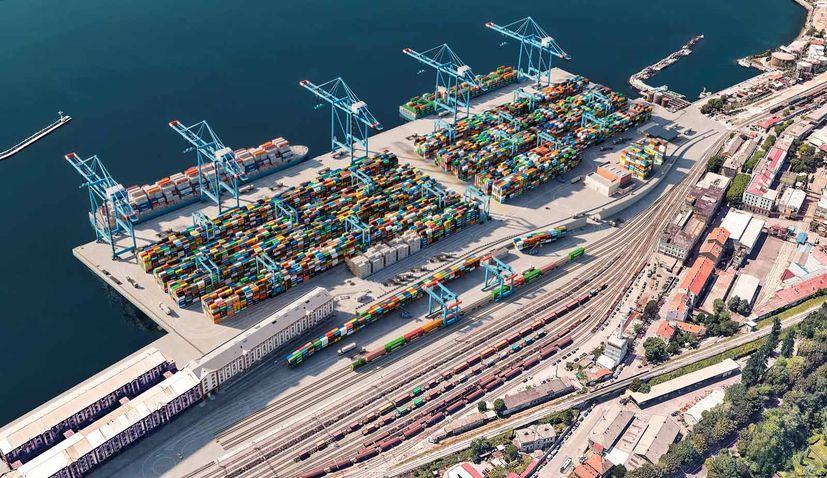
Rijeka Gateway has marked its first year of operations, reporting more than 370,000 TEU handled, new rail connections across Central Europe and an average truck turnaround time of around 15 minutes.
The container terminal, which began operations in September 2025, was developed to strengthen the Port of Rijeka’s role as a gateway for freight moving between the Adriatic and markets in Central and South-Eastern Europe.
According to Rijeka Gateway, more than 1,000 trains have operated since the terminal opened, with rail accounting for 53% of cargo handled.
New rail and shipping connections
Regular rail services now connect the terminal with Serbia, Hungary and Graz in Austria, providing new inland routes for exporters and importers in the region.
A weekly service to Graz, introduced in June, represents the terminal’s first direct operational rail connection with Austria.
Rijeka Gateway also operates feeder connections with the Italian ports of Trieste, Venice, Ravenna and Ancona. Further connections with Durrës and Ploče are expected to be introduced.
The terminal is also a regular port of call for the Gemini AE12/SE1 service, linking Asian ports with the Mediterranean and Adriatic.
Through cooperation with shipping companies Maersk and Hapag-Lloyd, Rijeka is also being used as a transhipment point for cargo moving to and from Italy.
Truck turnaround averages 15 minutes
The terminal says average truck processing time is now around 15 minutes, with a fastest recorded turnaround of 10 minutes.
Around 80,000 truck visits have been recorded during the first year, with more than 250 trucks passing through the terminal on an average day and peak volumes reaching around 600.
Digitalised gate procedures, including the Conroo driver application and Truck Appointment System, are used to manage arrivals and scheduling.
Rijeka Gateway reports 98% operational crane availability and 99% system availability during its first year.
Parallel berthing for smaller feeder vessels has also been introduced to reduce waiting times.
422 people now employed
The terminal currently employs 422 people, including 260 employees recruited since operations began in September 2025.
Women account for around one in five employees, including crane and vehicle operators.
More than 92,000 hours of training were delivered during the first year, following a 130,000-hour training and preparation programme before the terminal opened.
The company has also continued cooperation with the Faculty of Maritime Studies and the University of Rijeka, giving students opportunities to learn about modern port and logistics operations.
Rijeka Gateway operates around the clock and reported no lost-time injuries during its first year. More than 950 safety walks and inspections were carried out during the period.
The terminal also achieved ISO 14001:2015 environmental certification.
The increasing share of freight transported by rail is intended to support a shift towards lower-emission inland transport.
The terminal has also continued community programmes, including workshops for local children. More than 150 children have taken part in kindergarten activities focused on ports and logistics.
Rail infrastructure key to future growth
Further development of the Zagreb–Rijeka rail connection is expected to play an important role in increasing intermodal freight capacity.
According to Rijeka Gateway, development of the rail infrastructure is currently in the early design phase.
The terminal says additional rail and feeder connections could further expand Rijeka’s role as a logistics gateway between the Adriatic and Central and South-Eastern European markets.
After its first year of operations, the focus is now on expanding those connections and increasing the amount of freight moving through Rijeka by rail and sea.