Croatia’s LNG terminal could supply Germany within two years under new energy plan
- by croatiaweek
- in News

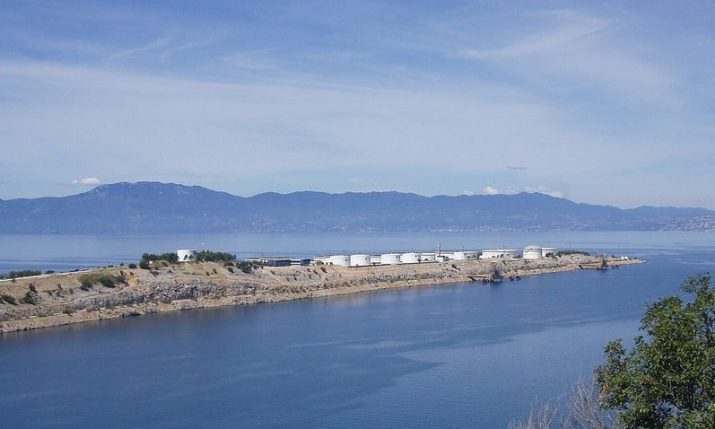
Omisalj, Krk (Photo: Wakowlk/CC BY-SA 3.0)
ZAGREB, 3 October 2026 – Croatia could begin supplying gas to Germany from its LNG terminal on the island of Krk within the next two years, Prime Minister Andrej Plenković said during talks with Bavarian Premier Markus Söder in Zagreb.
The proposal would strengthen the role of Croatia’s LNG infrastructure in supplying Central Europe and would require further development of the pipeline network through neighbouring countries.
Croatia’s LNG terminal at Omišalj currently has annual capacity of 6.1 billion cubic metres following an expansion of the facility.
Croatia’s own annual gas requirements are significantly lower, leaving capacity available for exports.
The proposed southern energy corridor would connect Croatia through Slovenia and Austria with Germany, including Bavaria.
Plenković said Croatia had completed technically and financially demanding projects to increase the capacity of its LNG infrastructure and expand its pipeline network.
The remaining challenge is establishing the necessary connections and transport arrangements through Slovenia and Austria.
Söder described the connection between the LNG terminal and Central Europe as strategically important for Bavaria and said he intended to promote the project at both German and European Union level.
The planned infrastructure would not necessarily be limited to natural gas.
The leaders also discussed the potential for the corridor to transport hydrogen in the future, creating a possible wider role for the infrastructure as Europe’s energy system changes.
The project reflects a broader European effort to diversify energy supply routes and strengthen connections between different parts of the continent.
For Croatia, the development would increase the strategic importance of Krk as an energy hub on the northern Adriatic.
The LNG terminal has already become an important part of Croatia’s energy infrastructure since becoming operational, while successive capacity increases have expanded the potential for regional exports.
A physical pipeline connection capable of moving additional volumes towards Germany, however, still needs to be developed.
Plenković said discussions with Slovenia and Austria would therefore be required to determine how gas could be transported northwards.
Croatia and Bavaria also have substantial economic and people-to-people links. Croatian government figures cited during the meeting put the Croatian population in Bavaria at around 115,000, while Germany remains one of Croatia’s most important trading and tourism partners.
The proposed energy corridor would therefore have implications beyond the gas market, potentially strengthening Croatia’s infrastructure links with Central Europe.