Oriental hornet back in Croatia after 60 years – what to do if you get stung
- by croatiaweek
- in News
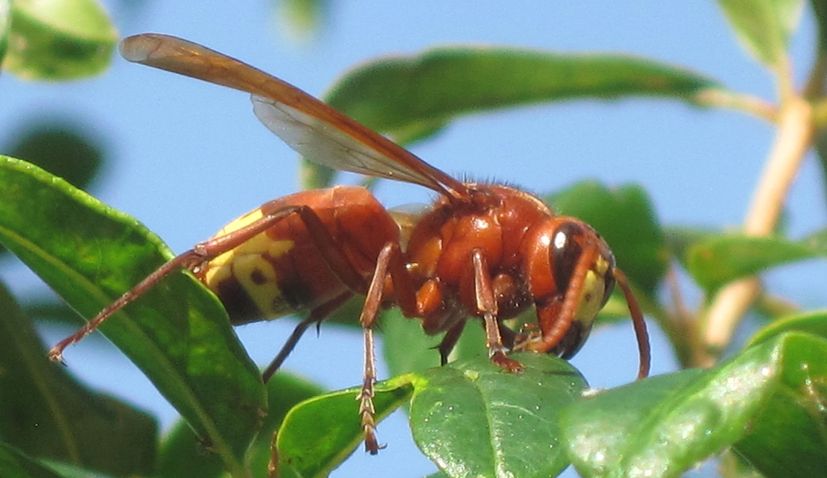
Oriental hornet (Photo: Bj.schoenmakers/Public domain)
The oriental hornet (Vespa orientalis) has returned to Croatia after more than sixty years, the Ministry of Environmental Protection and Green Transition has confirmed.
Although it may look intimidating, the species plays an important ecological role by preying on other insects, including agricultural pests, thus contributing to natural ecosystem balance.
Unlike the more common European hornet (Vespa crabro), the oriental hornet’s range is limited and has a subtropical to tropical distribution. It is the only hornet species in Europe also found in Africa.
Its natural range stretches from India and Nepal across southern Italy, Sicily, and the southern Balkans to the Sahara.
In Croatia, the species was first recorded in 1897 but disappeared from regular observation after 1963. Recent sightings include Krk in 2010, and this year in Solin, Kaštela, Split, and Novigrad in Istria, Večernji list writes.
The coast lies at the edge of its natural habitat, so occasional appearances are not unexpected. Experts note that while climate change has warmed the Mediterranean, there is no firm evidence that rising temperatures are influencing the hornet’s spread.
The oriental hornet can be identified by its mostly brown abdomen with a few yellow rings and a distinct orange tip.
This differs from the European hornet’s predominantly yellow abdomen and from the invasive Asian hornet (Vespa velutina), which is darker with light yellow legs.
Although native, the oriental hornet can be dangerous. Experts warn the public not to approach or destroy nests, as this can provoke attacks.
Its sting is painful and can be repeated multiple times, delivering venom that causes swelling, redness, and itching lasting up to three days. Those with severe allergic reactions, such as breathing difficulties or swelling of the face and throat, should seek emergency medical help immediately.
Citizens can report sightings through the iNaturalist app, where data are included in Croatia’s BioAtlas, or via the Invazivne vrste u Hrvatskoj app for invasive species.